















Horse Trading Venezuelan Oil: Houston’s In

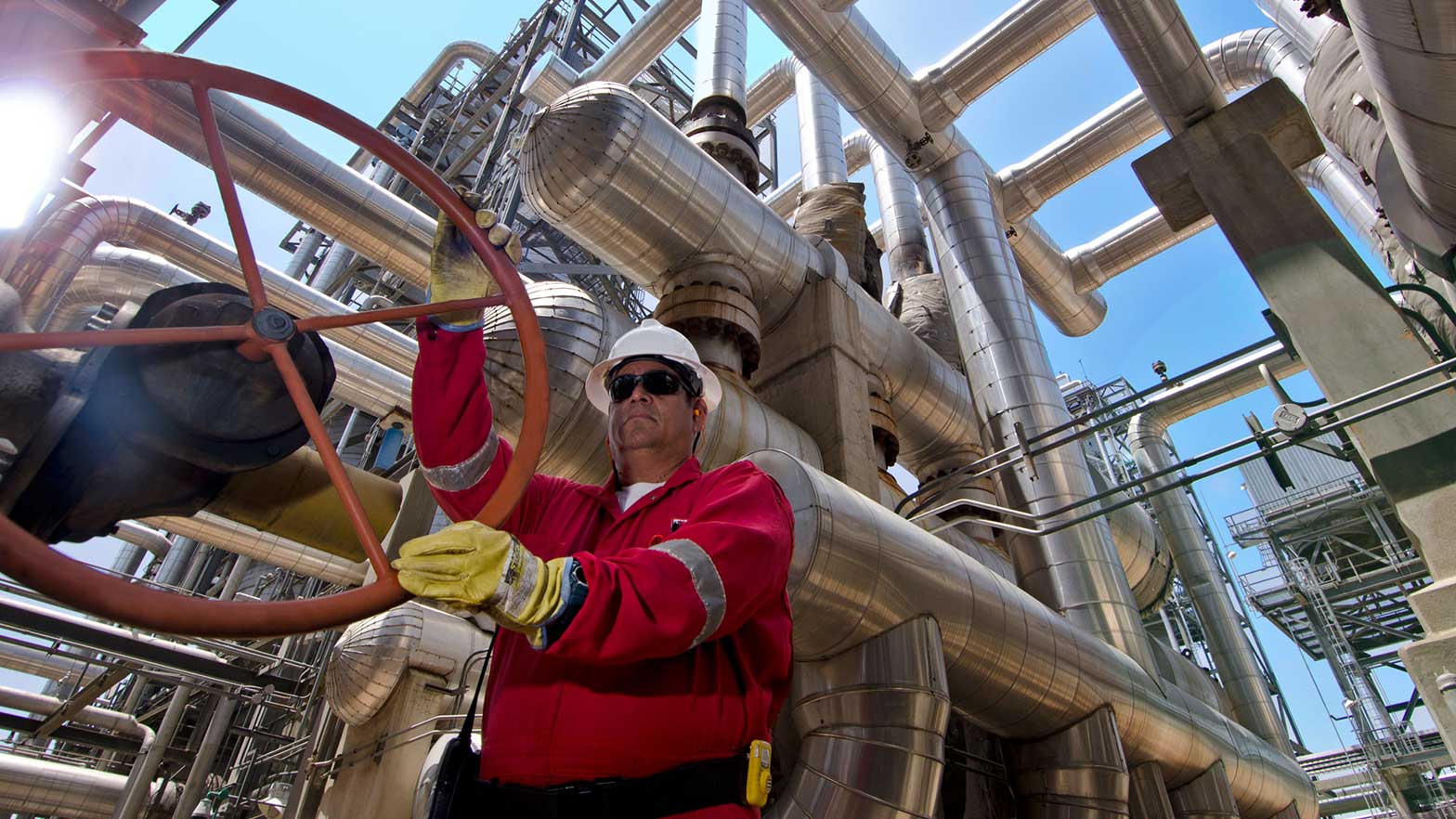
On January 9, President Trump invited American oil and gas CEOs to the White House to discuss Venezuela’s oil. A week before, Delta Force commandos had entered dictator Nicolás Maduro’s Caracas compound, grabbed him and his wife, and hauled them to Manhattan to face narcoterrorism, drug trafficking, and weapons charges. To get to Maduro, special forces had to overcome his Cuban guards. Trump updated the CEOs on Maduro, then asked them to sink $100 billion into Venezuela’s dilapidated oil infrastructure because greater production capacity would revitalize Venezuela’s economy and help bring prosperity to the Venezuelan people. He reminded them that tapping into what’s arguably the world’s largest oil reserves, with over 300 billion barrels, would generate “tremendous wealth” for both nations.
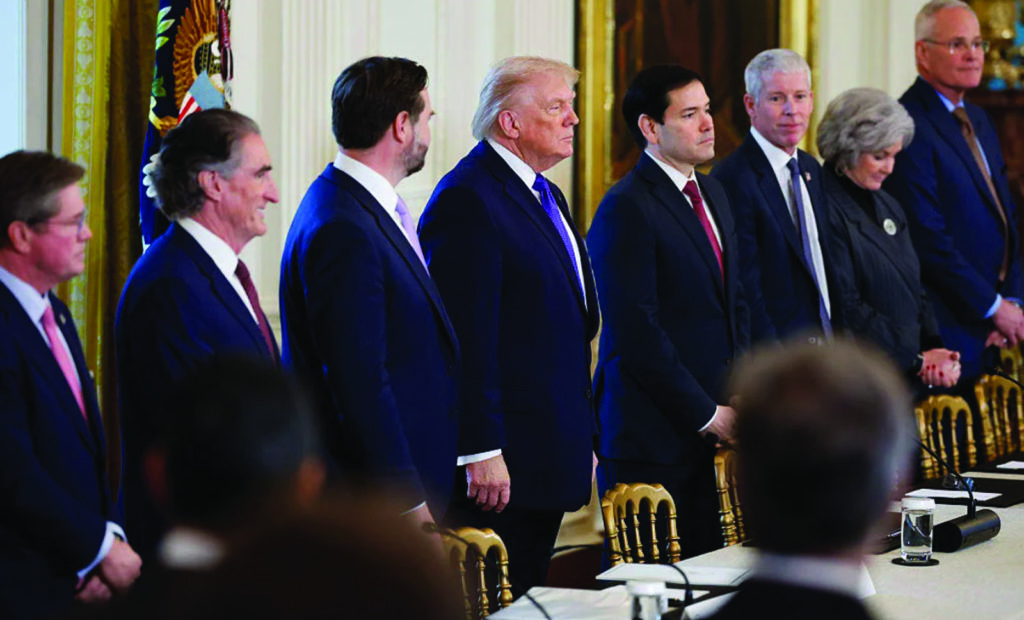
If ConocoPhillips’s CEO Ryan Lance seemed hesitant, all the good ole boys gathered in the East Room knew why. His company had taken an ass-whipping when Venezuela seized its assets, twice, with losses totaling twelve billion dollars. Legal battles to recoup are ongoing. “Good write off,” Trump chimed in for comic relief. Neither would ExxonMobil’s CEO Darren Woods rush back to Venezuela. The regime had stolen his company’s assets twice. For Woods, Venezuela was “uninvestable.” The way he saw it, without major changes like political stability and rule of law, doing business there was too risky. Besides, Maduro might be gone, but his minions still ran the government. Woods was however willing to send in technical teams to assess operations.
Not everyone hesitated. Chevron never let Socialist takeovers drive it out of Venezuela. Conoco and Exxon bailed out in 2007 when dictator Hugo Chavez reduced their ownership and expropriated their assets. Chevron on the other hand remained in a minority partnership with Venezuela’s state owned oil company PDVSA. After the U.S. imposed sanctions, Chevron operated under a restricted license and sanctions waiver that let it share oil with PDVSA but not give money to the regime. Through its Venezuelan joint ventures, Chevron which has been in Venezuela about 100 years, could quickly increase production like Trump wanted.
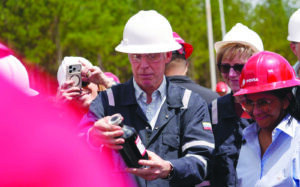
About a month after the Washington conclave, on February 11, Secretary of Energy Christopher Wright went to Venezuela to tour dilapidated infrastructure and meet and greet. Speaking from Caracas, Wright said Venezuela has been spiraling downhill for 25 years, eight million people have fled. Once a major oil producer, its production “collapsed.” Selling its oil will help Venezuela go in a positive direction, so people “will get electricity most of the day instead of just a few hours a day” and improve conditions “to prevent it from being a failed state.”
It’s not my goal to discuss why an oil rich country became an economic train wreck, or why a country with an ungodly amount of oil did such a miserable job of sustaining production. I’m simply recounting events that happened over about four months tied to Trump’s meeting with oil dudes over Venezuela, with brief background. The truth is, the minute I saw news coverage of Trump’s White House meeting, I knew Houston companies were part of the horse trading. Any way you look at it, provided there are assurances about tiny matters like kidnapping and conflict resolution, Venezuela being “open for business” benefits Houston.
One way to prevent Venezuela from being a failed state while ramping up production was to sell “quarantined” oil. The U.S. had been seizing tankers with Venezuelan oil intended to subsidize bad actors, like the tanker that would bankroll Iran’s Revolutionary Guard and Hezbollah. In December 2025 it commandeered a tanker headed to China for a slightly different reason. PDVSA sold oil to China at rock bottom prices because China holds Venezuela’s debt, but selling to adversaries at cut rate prices instead of market prices shortchanges the Venezuelan people. Maduro raised holy hell. Blockades were “piracy,” they violated rights to free navigation and trade. Rubio said they were quarantines, not blockades, blockades were an act of war. Quarantines enforced sanctions, some imposed by Biden. Trump said China was welcome to buy Venezuela’s oil “at normal prices like everyone else.” An added advantage of disrupting oil exports was it gave the U.S. “leverage” over the regime.
Amidst the commotion, Secretary Wright sold fifty million barrels of oil on the global market at market prices. Proceeds from the sale however were at risk because PDVSA’s creditors were perched like vultures hoping to freeze accounts, allowed under U.S. banking laws. So Wright temporarily parked the money in overseas accounts, then funneled it to Venezuela. After that initial infusion, overseas accounts weren’t needed and proceeds flowed directly from U.S. based accounts to Venezuela. Leverage, and Maduro’s January 3 arrest brought the regime to the table. It “released” the sanctioned oil to the U.S. and agreed to economic revitalization. It presumably saw the light and chose prosperity over mass migration and drug trafficking.
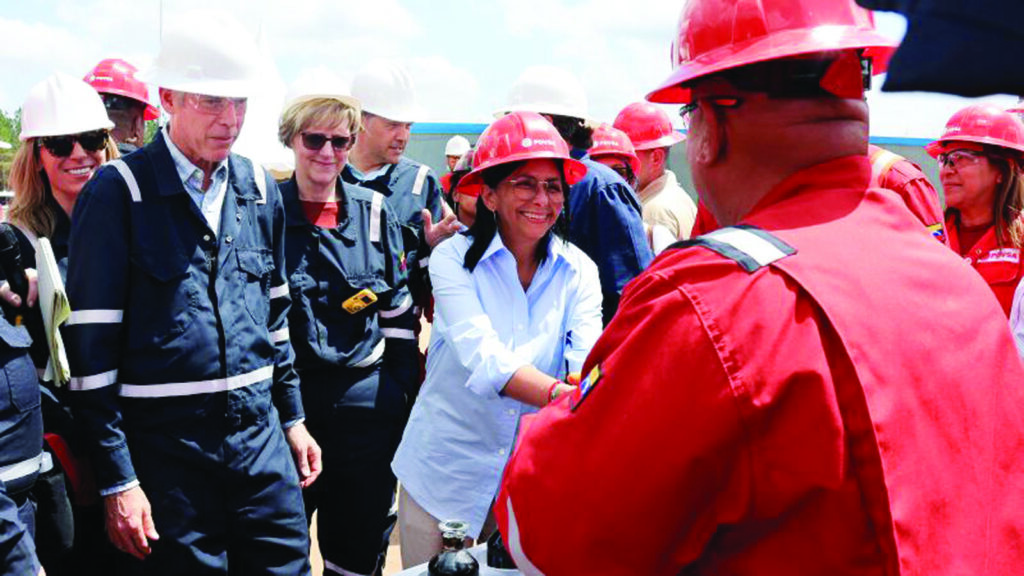
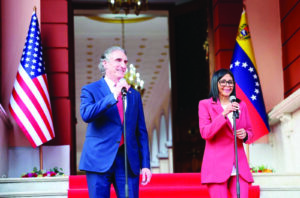
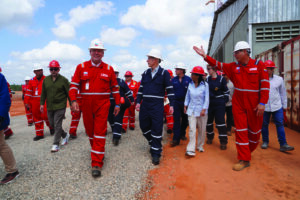
At the top of Wright’s meet and greet list was Delcy Rodriguez who had been vice president under Maduro and stepped in as interim president after his arrest. Standing alongside Wright in Caracas, Rodriguez told the press it was “unprecedented” for a Secretary of Energy to visit Venezuela. In exchange, Wright praised Rodriguez for her January overhauling of Venezuela’s hydrocarbons law to allow oil and gas companies more lucrative contracts than the old joint venture models, with some privatization. Wearing hardhats and shaking hands as giddily as drill pipe salesmen, Wright and Rodriguez toured PDVSA’s and Chevron’s oil operations. Before leaving Venezuela, Wright said oil sales had reached over $1 billion and would increase.
“Baker Hughes, Halliburton, KBR are all there signing deals.” It’s early March, and Secretary of the Interior Doug Burgum is in Caracas with CEOs of U.S. energy and mining companies. Burgum named for reporters three Houston-based oil and gas service companies there to hash out deals. These three had strong ties to Venezuela. Halliburton worked there until sanctions drove it out in 2020. After Trump’s meeting it told shareholders “the phone was ringing off the hook” over Venezuela. Baker Hughes and KBR never left. Among other things, Baker Hughes supports Chevron’s oil production and KBR helps to develop offshore natural gas fields.
Secretary Burgum was especially pumped about reforms to Venezuela’s mining law. Like the hydrocarbons law, Rodriguez fast tracked changes to the law governing minerals, including critical and rare earth to allow more favorable terms and encourage investment. Burgum said, “the optimism among the mining crowd was great.” He also said the Venezuelan government assured the mining companies’ security, although if you ask me it would be stupid to operate a mine in Venezuela without private security. According to Burgum, the investments discussed represented billions of dollars.
You might recall Houston headquartered Chevron didn’t jump ship during Socialist takeovers. In February Chevron received Venezuelan oil at its Pascagoula, Mississippi refinery, a 2,000 acre Gulf Coast facility designed to process Venezuela’s heavy crude into products like jet fuel. Down the coast at Corpus Christie, Citgo’s refinery after a long hiatus received Venezuelan oil. Nearby Valero’s refinery announced it was purchasing more Venezuelan oil. An enormous tanker holding Venezuelan crude served as backdrop for Trump’s speech at the Port of Corpus Christie. Trump visited Whataburger.
I’ve often wondered about the young men from Caracas who studied petroleum engineering in 1974. They told me how beautiful Lake Maracaibo was, and their plans to work in oil, which surely went up in smoke in 1976 when President Perez nationalized Venezuela’s oil industry. Perez stole the assets of foreign oil companies, and handed control of oil operations to state owned Petróleos de Venezuela S.A. (PDVSA). Later Hugo Chavez monkied with PDVSA’s finances and stripped the company of technical expertise. Chavez used PDVSA as his piggy bank to underwrite his programs and prop up proxies, particularly his buddy Fidel.
Years later I was acquainted with Venezuelan petroleum engineers who shipped care packages home because food and medicine and essentials like toilet paper were scarce or unavailable. Food was rationed. When food was available, prices were inflated and unaffordable. The engineers brought their parents to Houston for medical treatment because many Venezuelan hospitals lacked electricity, antibiotics and surgery equipment. Some surgeons worked by cell phone light.
One engineer‘s family farm was expropriated. We know Chavez stole millions of acres of private land from farm and ranch owners and stole factories and warehouses from private companies, because private property was “the property of the nation,” a primary tenet of Marx’s ideology which Chavez shared with Castro. Chavez was enamored with the way Castro never caved to the U.S. He gave Cuba cheap oil and subsidized Cuba’s economy after the Soviet Union’s collapse. On one of his regular broadcasts on state TV, some segments absolute clown shows, Chavez repeated Castro’s warning that the C.I.A. was, “the most perfect killing machine ever invented.”
Beyond cutting red tape to nail investments, Rodriguez wants a homecoming. If you fled, come home. You are safe. American Airlines resumed daily flights. The U.S. embassy reopened. In April the Assistant Energy Secretary accompanied more oil execs to Caracas. Treasury Secretary Scott Bessent, usually reserved, seem to gush over the International Monetary Fund reengaging Venezuela, “an important step to economic stabilization and recovery.” IMF interaction with Venezuela’s interim government is a baby step to debt restructuring. American companies agreed to improve Venezuela’s electricity.
Things are paying off for Chevron which never bailed. April 13 it finagled better agreements with PDVSA, expanding its oil position through an “asset swap.” Chevron is gradually being reimbursed for stolen assets. Critics are ripping Rodriguez to shreds. They circulate nasty cartoons of her sucking up to Trump. Actually, her tenure might be short. As Secretary Wright, who can’t come to Texas “without getting some brisket” continually reminds us, Venezuela will eventually hold an election.
While Houston headquartered ConocoPhillips decides about reentering and Houston headquartered ExxonMobil assesses operations, keep your eye on Houston’s Hilcorp Energy which appeared to be chomping at the bit to take on Venezuela. In Trump’s Washington meeting, founder and chairman Jeff Hildebrand was “fully committed and ready to go, to rebuild infrastructure in Venezuela.” Hilcorp is the largest privately held oil and gas exploration and production company in the U.S. If those guys hunkered down to increase production, they would kick butt.