


















Texas Renaissance Festival: A Kingdom in the Texas Woods

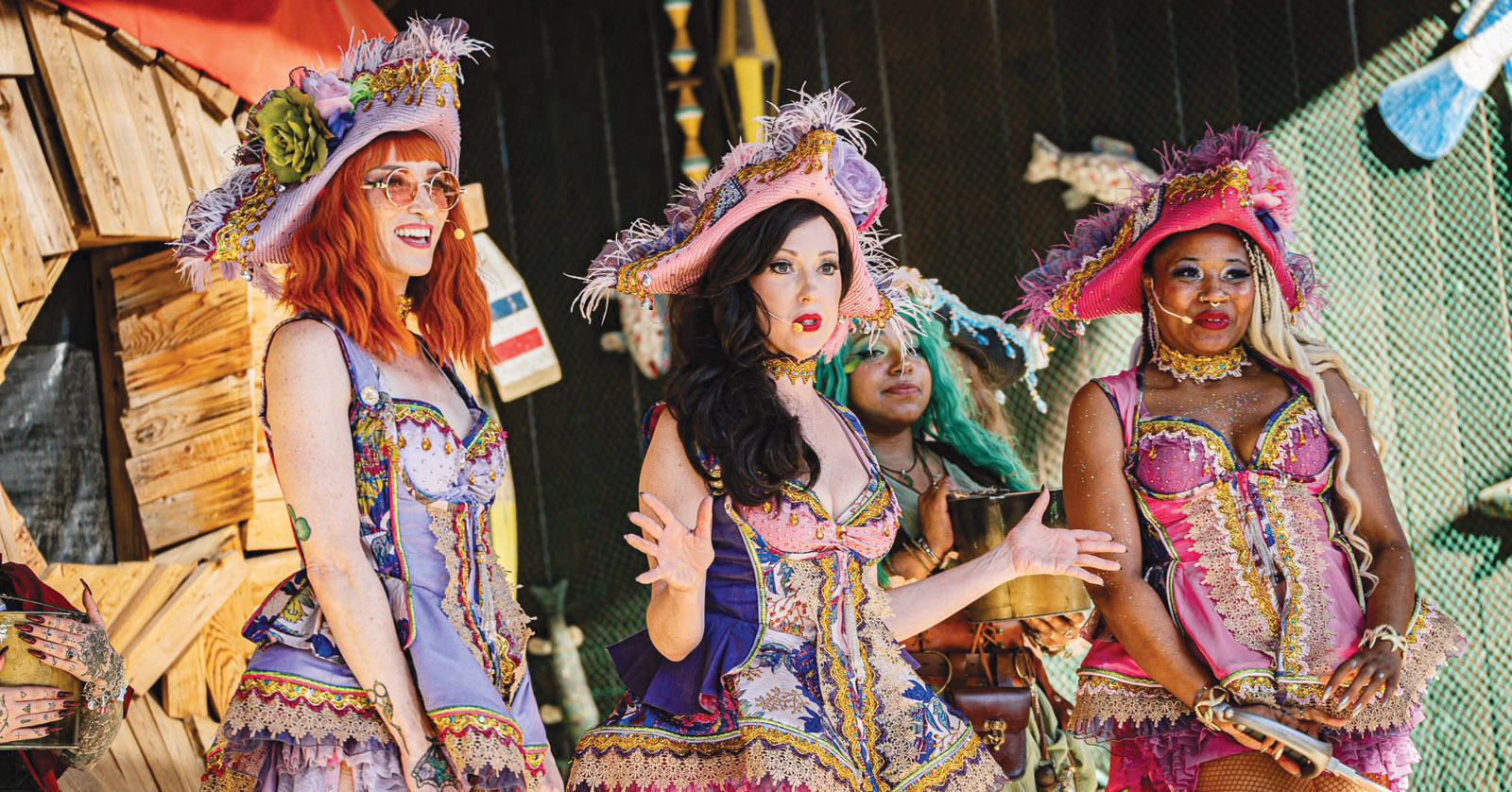
 As sure as the fall heat is the arrival of the annual Texas Renaissance Festival. The Ren Fest as it is known to locals grew from a gravel pit into a legendary celebration of history, imagination and tradition. Now its fall run of fifty days sports over 500 shops on sixty acres in the piney woods near Plantersville just north of Magnolia, Texas. This is where it all happens. Each autumn since 1974 knights have prepared for battle, queens greet their subjects, and merchants display handcrafted treasures. Sounds of bagpipes and laughter drift through a village seemingly untouched by time.
For a few weekends each fall, the modern world gives way to an imaginary 16th-century kingdom where visitors are encouraged to leave ordinary life behind.
The Texas Renaissance Festival is one of the largest and most enduring celebrations of its kind in the US. Before the elaborate castles, bustling marketplaces and hundreds of thousands of visitors, there was little more than an abandoned gravel pit, a handful of performers and one man’s vision.
The Birth of a Kingdom
The story begins in 1974, when George Coulam, artist and entrepreneur with a fascination for Renaissance culture, wanted to celebrate the art, architecture and pageantry of this era.
Coulam envisioned something beyond a traditional county fair. He wanted a place where visitors could experience the sights and sounds of a European village. The original grounds occupied approximately 15 acres of a former strip-mining site near what would become Todd Mission, between Magnolia and Plantersville.There were just three stages, a scattering of makeshift structures and artisans displaying their wares on blankets. Early performers entertained audiences with music, comedy and improvisational theater. This was the foundation for what would become a Texas institution.
 George Coulam was no ordinary festival organizer. Known as “King George,” he became nearly as recognizable as the festival itself. His ambitions extended far beyond a seasonal attraction. He acquired additional land, commissioned buildings inspired by European architecture and encouraged craftspeople, entertainers and merchants to become permanent members of his growing Renaissance community.
In 1982, Coulam helped incorporate the small city of Todd Mission, where he would serve as mayor for decades. The community and the festival became inseparable, creating an unusual Texas town whose identity revolved around an imaginary royal kingdom. As the years passed, simple wooden platforms gave way to permanent stages, elaborate storefronts, cobblestone-style walkways and imposing structures reminiscent of medieval castles. What began as an experiment became a major cultural and tourism destination.
A Festival That Blossomed Into a Tradition
 By the 1980s and 1990s, the Texas Renaissance Festival had developed a loyal following, particularly among Houston-area families. For many, the annual journey to Todd Mission became as much a part of autumn as football games and holiday gatherings. Children and adults marveled at armored knights charging toward one another on horseback. Marketplaces sold handmade jewelry, leather goods, pottery, swords and elaborate costumes.
The festival also developed its own distinctive culinary traditions. Giant roasted turkey legs became almost synonymous with the experience, while taverns, bakeries and outdoor dining. The attraction also provided a livelihood for generations of artists, craftspeople and traveling entertainers.
From Local Curiosity to National Recognition
As the festival matured, its reputation spread well beyond Texas. Visitors began traveling from across the country and overseas to experience the elaborate village and its unusual combination of historical pageantry, theatrical entertainment and fantasy. The grounds expanded to roughly 55 acres, with hundreds of shops, multiple performance stages and a growing calendar of themed celebrations. The festival’s popularity reached another milestone in 2015 when readers of USA Today selected it as the nation’s Best Cultural Festival.
On the 50th anniversary in 2024, the event had become a tourism powerhouse, welcoming more than 530,000 visitors over eight weekends. For the greater Houston region, it represented something particularly distinctive: a major cultural attraction built not around professional sports, shopping or conventional amusement rides, but around imagination, craftsmanship and the enduring fascination with history.








A Changing of the Crown
The festival’s more recent history has been marked by significant changes. In 2024, HBO’s documentary series Ren Faire introduced national audiences to the personalities and internal struggles surrounding the festival’s leadership and succession. The documentary portrayed a world in which theatrical royalty and real-life business decisions had become deeply intertwined.

In May 2025, a Texas judge ordered the sale of the festival following a lengthy legal dispute involving Coulam and prospective buyers. Later that month, Coulam died at age 87. His passing marked the end of an extraordinary and sometimes contentious chapter in Texas entertainment history. The festival continued under new ownership, with the family behind the acquiring companies having longstanding connections to its merchant community. The transition represented an important turning point for an institution that had been closely associated with one man’s personality for half a century.
More Than a Festival
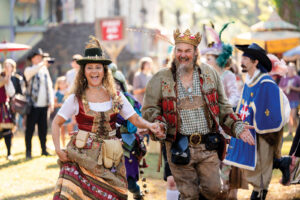 Perhaps the most remarkable achievement of the Texas Renaissance Festival is not its size, its attendance or even its elaborate architecture. It is the sense of community that has developed around it. For generations of Houston-area residents, the festival has become a shared family memory. Parents who once attended as children now bring their own sons and daughters. Craftspeople have built businesses around their work. Performers have formed friendships that extend across decades. And every autumn, thousands of visitors once again step through the gates, exchange their everyday routines for a little adventure and become part of a world where imagination reigns.
The Texas Renaissance Festival has survived changing tastes, economic uncertainty, leadership controversies and the passing of its founder. In April of 2023 Meril Rivard agreed to buy the festival and its operations from Coulam, and a nasty lawsuit ensued The agreement called for payments in the millions of dollars. But in August of 2023, Coulam backed out of the deal, refusing the sale.
In May 7, 2025, after a week-long trial, Grimes County Judge Gary W. Chaney ordered Coulam to sell the festival to Rivard, and awarded $22 million in damages and $1 million in attorney fees.
More than 50 years after its humble beginnings, the kingdom in the Texas woods remains a testament to that idea and with new owners vowing to continue the festival. So when the trumpets sound and the gates open each fall, the magic begins again.
Tickets can be purchased online at www.texrenfest.com.