
















Dissecting My New Orleans Vieux Carré Cocktail

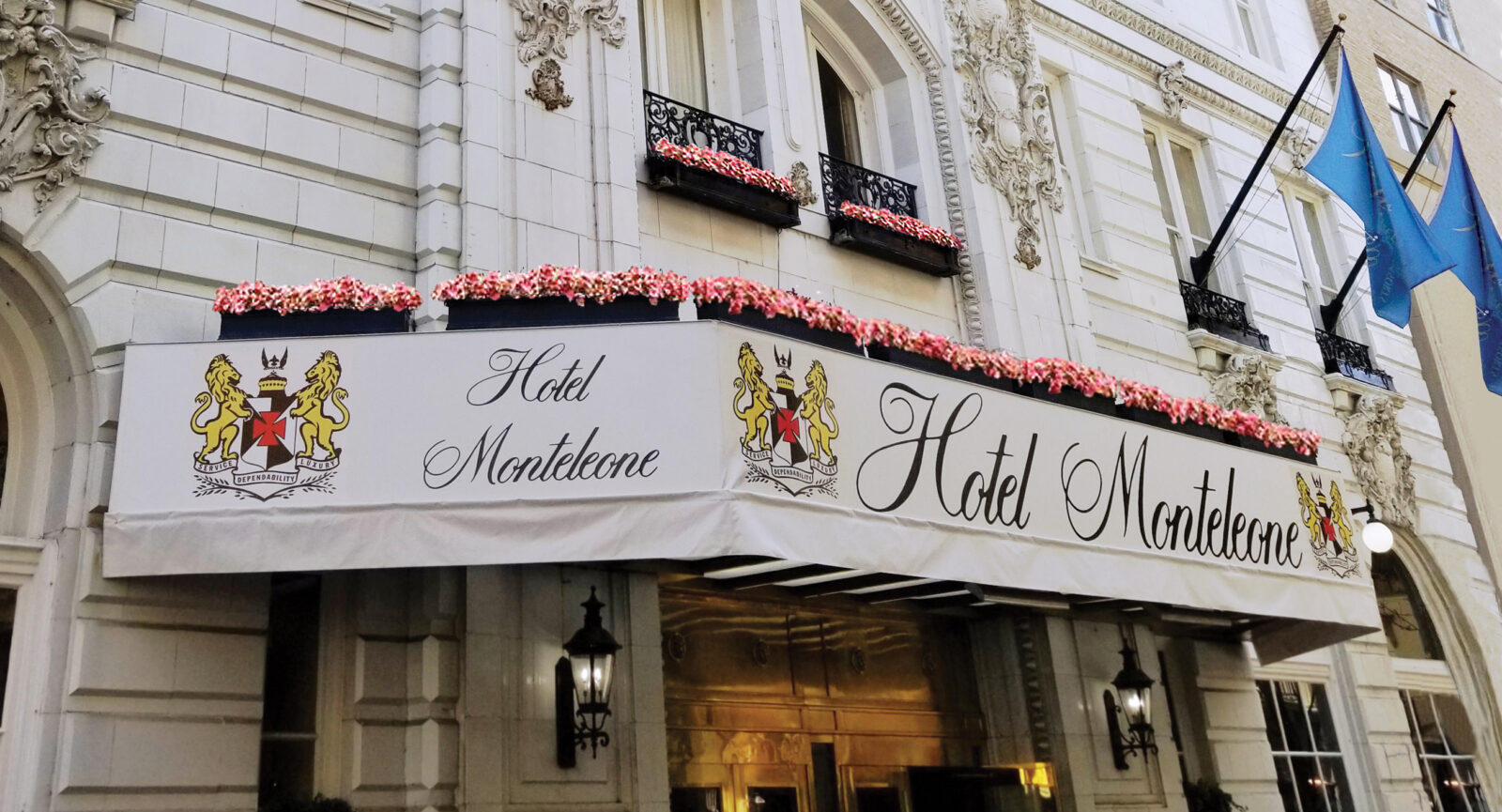
On a recent trip to New Orleans, I started my visit by drinking a Vieux Carré cocktail in the Carousel Bar at the Monteleone Hotel, which if you ask me is a pretty good way to start. I’m partial to the Monteleone’s Carousel Bar. Hemingway drank there. It’s said Hemingway threw his drink against the wall in Paris because it didn’t meet his standards, although it’s hard to imagine a Monteleone bartender disappointing Papa Hemingway. If the truth be known, Tennessee Williams got a little sloppy in the bar. When Tennessee wasn’t a guest at the Monteleone, he occupied various homes in the French Quarter, enjoying it’s raunchier offerings. Interestingly, Tennessee wrote much of his Pulitzer Prize winning play “A Streetcar Named Desire” while living in the Quarter.
Truman Capote carried on in the Carousel Bar. New Orleans was Capote’s birth place. Likening it to a sacred pilgrimage, he returned regularly to raise hell. Faulkner as well was a regular, in fact one of the hotel’s suites is named for him. No wonder the bar is designated an official literary landmark. Drinking in an official literary landmark I’ll admit can feel sassy, but beyond that, what draws me to the Carousel Bar is nostalgia. I recall going there with Daddy after betting on horses at the race track, and I remember a fun afternoon at the revolving bar with my great aunt Joanna who was in her eighties at the time. I know I’ll see Daddy and Joanna again one day.
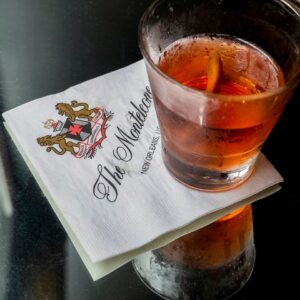
I watched closely as the Monteleone bartender made my Vieux Carré. He mixed Rye Whiskey, Cognac, Sweet Vermouth, Bénédictine, Peychaud’s Bitters and Angostura Bitters with ice and a lemon peel, poured through a strainer, and my fist swig went down. Goddamn. It was exquisite. It started me thinking about the insanely captivating New Orleans (Nawlins) cocktail tradition from which the drink originated. This article will briefly reflect on the Vieux Carré, and give readers a sense of how it fits into the bigger picture of the Big Easy’s “classic” cocktails.
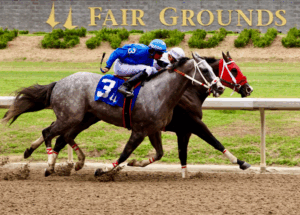
The Vieux Carré cocktail was invented in 1938 by the Monteleone Hotel’s head bartender Walter Bergeron, although at the time Walter devised the drink, the revolving Carousel Bar didn’t yet exist. That bar opened in 1949. Before 1949, the hotel’s watering hole was called the Swan Room. Walter named the drink he invented in the Swan Room in honor of the city’s historic district, the French Quarter. Vieux Carré translates to “Old Quarter.” Walter’s invention helped make 1938 an auspicious year for cocktails because it was also the year Kentucky Derby bigwigs consecrated the Mint Julep as official drink for the annual race.
It goes without saying, the Vieux Carré wasn’t the only showstopper to enter the annals of New Orleans cocktail history. In 1888, Henry Ramos created the Ginn Fizz, and served it in his joints on Gravier Street. The Roosevelt Hotel, recognizing a valuable asset, purchased the Ginn Fizz recipe. Louisiana governor Huey Long who kept a suite at the Roosevelt and who liked a well made Gin Fizz as much as his brother Earl liked strippers, worried perhaps justifiably, he wouldn’t get a decent Ginn Fizz on trips to Manhattan. So Huey brought a hotel bartender to Manhattan.
Holding court at the Roosevelt, ole Huey guzzled his Ginn Fizz and boasted about taxing oil companies to pay for roads and hospitals, or railed demagogue-style against Wall Street and the corrupt politicians who whored out to it. Some historians believe Huey strong armed state job kickbacks, and hid them in a box in the hotel’s basement. After he became U.S. Senator Huey got assassinated. What’s particularly shameful is the murder took place in the new Capital building he built for “da people of the stet of Loos-iana.”
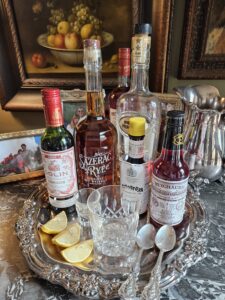
I had a memory of visiting governor Edwin Edwards in his office at Huey’s new Capital, introduction arranged by a friend. As I sipped my Vieux Carré I wondered if Edwin returned to his favorite Monteleone suite after he left prison. Edwin pulled off getting elected governor of the state four times, which is truly remarkable. While on a roll, he famously said he would have to be caught in bed with a “dead girl or a live boy” to lose voters, apparently misjudging the voters sitting on the jury that convicted him of racketeering and fraud associated with the sale of riverboat casino licenses, which he denied until he died.
The way I see it, the Vieux Carré I drank rests on the backs of several important events. First and foremost was the development of its vitally essential ingredient, Peychaud’s Bitters. In 1834 an apothecary named Antoine Amédée Peychaud blended botanicals into an aromatic tonic in his Royal Street pharmacy and called his concoction Peychaud’s Bitters. Peychaud worked in the vein of apothecaries and snake oil salesmen who mixed roots, herbs and spices into elixirs that “cured” maladies. Peychaud’s Bitters must have miraculously cured a few maladies because they won a prize in Germany in 1869. That prize is listed on the label of the bottle of Peychaud’s Bitters in my liquor cabinet.
Not satisfied with creating bitters, Peychaud doubled down and mixed his bitters with his favorite cognac, Sazerac de Forge et Fils Cognac, soon after adding more ingredients, absinthe being one. Later when absinthe was sidelined as illegal for its psychoactive properties, bartenders substituted anise flavored Herbsaint, nevertheless Peychaud had unleashed the Sazerac Cocktail, now Louisiana’s official state cocktail. While the Sazerac certainly isn’t America’s “first” cocktail, many New Orleanians claim it’s the first known by name to historians. By 1857 a coffee house and saloon, the Sazerac House, served the Sazerac. Things got messy. There were proprietary squabbles and ownership changes, thereafter Sazerac House became a wholesale liquor business. In the end though an entity called the Sazerac Company owned Peychaud’s Bitters as well as rights to the Sazerac. Today the privately owned Sazerac Company is one of the world’s largest distillers with approximately 450 alcohol brands and revenue estimated at $3 billion annually.
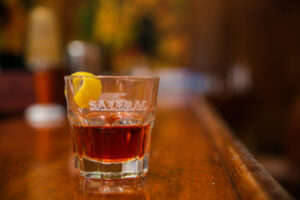
Peychaud’s Bitters and Sazerac cocktail weren’t the only developments that laid groundwork for the 1938 Vieux Carré. By the 1880s New Orleans bartenders were making Sazeracs with American Rye Whiskey instead of cognac as the main ingredient. They modified Peychaud’s original Sazerac recipe because cognac had become hard to get, and because cocktails mixed with whiskey, bitters and sugary stuff had become “way” popular. Bourbon with bitters also gained popularity, fact is in the 1880s a Big Daddy from Kentucky introduced the bourbon “Old Fashioned” to the Waldorf-Astoria for New York’s city slickers.
To a certain extent, the Monteleone’s Vieux Carré seems rooted in Peychaud’s two creations as well as in the overall 19th century tradition of mixing whiskey and bitters. Along with whiskey, Peychaud’s Bitters, cognac and the other ingredients, Walter’s recipe calls for Angostura Bitters, which actually predate Peychaud’s Bitters. Angostura Bitters were developed in 1824 by a German doctor in Venezuela who mixed herbs and spices like gentian, cinnamon, cardamom, and clove into an “elixir.”
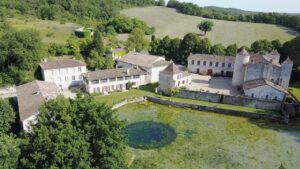
It’s worth mentioning that if you’re a sucker for tradition, the Sazerac Bar in the Roosevelt Hotel upon request makes a Sazerac with Peychaud’s favorite Sazerac de Forge cognac instead of rye as the main ingredient, but you’ll plop down double the price. I can see the point in paying. It’s a way of experiencing the cognac Peychaud mixed with bitters in the 1830s and also linking yourself to the Sazerac families’ beginnings in France’s cognac region which reach to the 1630s. That’s a hell of a lot of tradition. Nawlins is big on tradition, thus Sazerac Bar and Peychaud’s Bar and Herbsaint Restaurant and Absinthe House Bar, the last believed to be the city’s oldest and connected to pirate Jean Lafitte. Louis Armstrong and Sinatra used to drop in. Did I mention Stanley Restaurant named for a character in Tennessee’s play. New Orleans was founded in 1712 and named for King Louis XIV’s nephew Philippe, Duke of Orleans, who ruled as regent of France for eight years while King Louis XV matured. Ironically, governor Edwards hosted a fund raising banquet at King Louis’s Versailles palace.
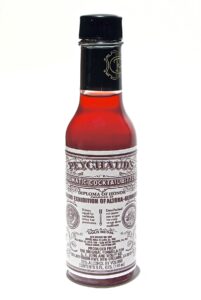
Here in Houston, Spec’s Liquor and Total Wine sell Peychaud’s Bitters. To get a properly made Vieux Carré it’s best to go somewhere that offers “classic” cocktails and avoid places with a bunch of ridiculous recipes. Two places I recommend for classic drinks are Brennan’s and Anvil Bar in Montrose.