


















Museum of Fine Arts, Houton presents “Buddha | Nature: Five Dialogues on Our Shared World”

![09a Buddha Head [detail], China, Tang dynasty, 8th century](https://www.intownmag.com/wp-content/uploads/2026/03/09a_Buddha-Head-detail-China-Tang-dynasty-8th-century-180x180.jpg) +6
+6 Museum of Fine Arts, Houton presents “Buddha | Nature: Five Dialogues on Our Shared World”
![09a Buddha Head [detail], China, Tang dynasty, 8th century](https://www.intownmag.com/wp-content/uploads/2026/03/09a_Buddha-Head-detail-China-Tang-dynasty-8th-century-740x710.jpg)
![11a Beili Liu, Artic MendingSnow Mandala [mandala], 2022](https://www.intownmag.com/wp-content/uploads/2026/03/11a_Beili-Liu-Artic-MendingSnow-Mandala-mandala-2022-740x710.jpg)
Museum of Fine Arts, Houton presents “Buddha | Nature: Five Dialogues on Our Shared World”
Museum of Fine Arts, Houton presents “Buddha | Nature: Five Dialogues on Our Shared World”
Museum of Fine Arts, Houton presents “Buddha | Nature: Five Dialogues on Our Shared World”
![09a Buddha Head [detail], China, Tang dynasty, 8th century](https://www.intownmag.com/wp-content/uploads/2026/03/09a_Buddha-Head-detail-China-Tang-dynasty-8th-century.jpg)
Museum of Fine Arts, Houton presents “Buddha | Nature: Five Dialogues on Our Shared World”
Museum of Fine Arts, Houton presents “Buddha | Nature: Five Dialogues on Our Shared World”
Museum of Fine Arts, Houton presents “Buddha | Nature: Five Dialogues on Our Shared World”
Museum of Fine Arts, Houton presents “Buddha | Nature: Five Dialogues on Our Shared World”
Museum of Fine Arts, Houton presents “Buddha | Nature: Five Dialogues on Our Shared World”
![11a Beili Liu, Artic MendingSnow Mandala [mandala], 2022](https://www.intownmag.com/wp-content/uploads/2026/03/11a_Beili-Liu-Artic-MendingSnow-Mandala-mandala-2022.jpg)
![09a Buddha Head [detail], China, Tang dynasty, 8th century](https://www.intownmag.com/wp-content/uploads/2026/03/09a_Buddha-Head-detail-China-Tang-dynasty-8th-century-225x300.jpg "Buddha Head [detail]")
The Museum of Fine Arts, Houston just opened “Buddha|Nature: Five Dialogues on Our Shared World.” The exhibit presents ancient Buddhist art alongside contemporary expression that embodies Buddhist concepts.
Here’s what MFAH wants you to know:
The Museum of Fine Arts, Houston presents “Buddha/Nature: Five Dialogues on a Shared World,” an exhibition that explores key teachings of Buddhism that center on inherited patterns, cyclical relationships and how we engage with the natural world. Pairing five ancient Buddhist sculptures from the Xuzhou Collection, a private collection of Buddhist masterpieces, with a selection of works by six international artists, Buddha/Nature will be on view at the MFAH through May 10, 2026.
“The Xuzhou Collection has been assembled with extraordinary connoisseurship and deep understanding of Buddhism,” comments Gary Tinterow, director and Margaret Alkek Williams chair of the MFAH. “It is a singular collection in that it brings together sculptural representations of the Buddha from all the Asian cultures that have historically embraced Buddhism, and it is remarkable for the variety and beauty of the individual objects. We are deeply grateful to the creator of the Xuzhou Collection, who wishes to remain anonymous, for placing these works of art on long-term loan with us in Houston. For five years they have graced our galleries of Asian art, while some were featured in the exhibition Living with the Gods last fall. Buddha | Nature will for the first time provide a contemporary context for a selection of images of the Buddha drawn from the Xuzhou Collection.”
Hao Sheng, consulting curator to the MFAH and organizing curator of this exhibition, explains, “This exhibition brings ancient Buddhist sculptures into dynamic dialogue with contemporary art. These sacred objects take on new resonance when paired with modern works that explore fundamental questions about existence and harmony. As we witness shifts in our natural environment, we are invited to reflect on the impact of our collective choices in order to achieve a deeper understanding of our place within a changing world.” Buddha/Nature has been organized across five galleries, each with a unique focus.
Gallery 1: Samsara
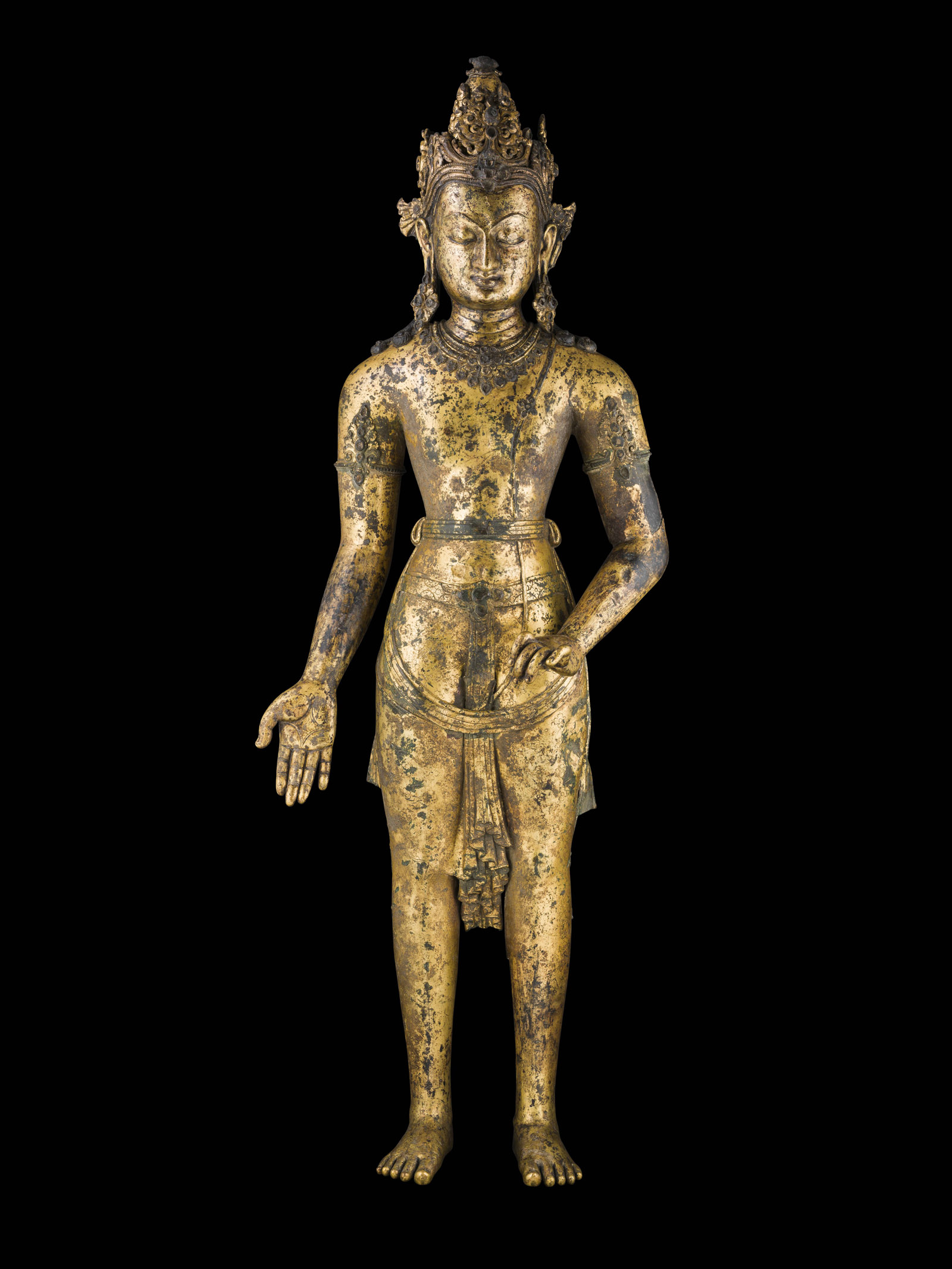
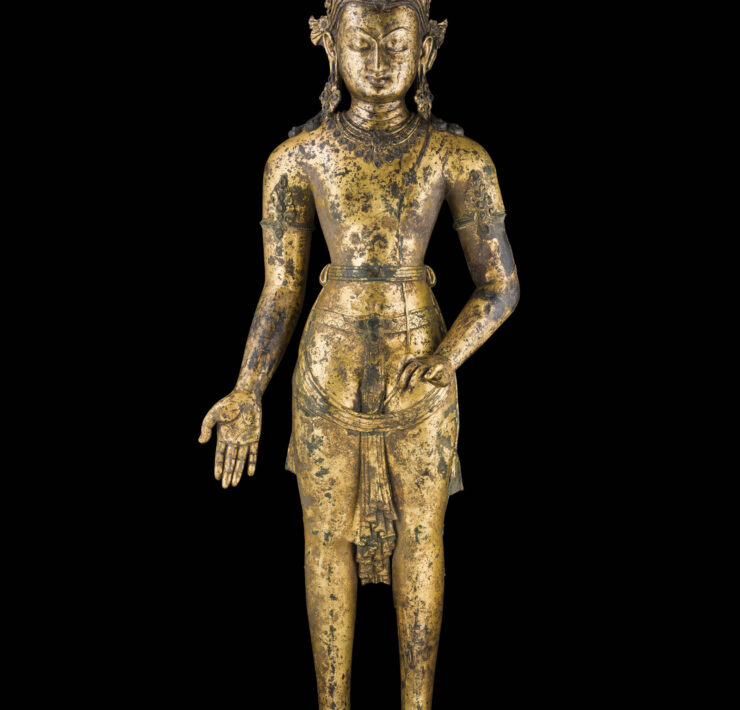
This first gallery introduces the connection between nature and Buddha’s teachings. American artist Beverly Penn casts bronze from weeds that she collects from the roadsides and fields of Texas Hill Country. For this exhibition, she has created Samsara (2025), a commission from the MFAH. This circular wall piece, created from invasive plants, hints at the Buddhist idea of Samsara, the endless cycle of life and death and rebirth, and its driving forces of greed, ignorance and fear. Placed behind a 12th century Tibetan gilt-copper Wisdom Buddha, Samsara represents the web of life in both Buddhist cosmology and ecological systems. The placement of the ancient Buddha sculpture within this contemporary “halo” signifies that personal well-being and the health of our environment are interdependent.
Gallery 2: Impermanence
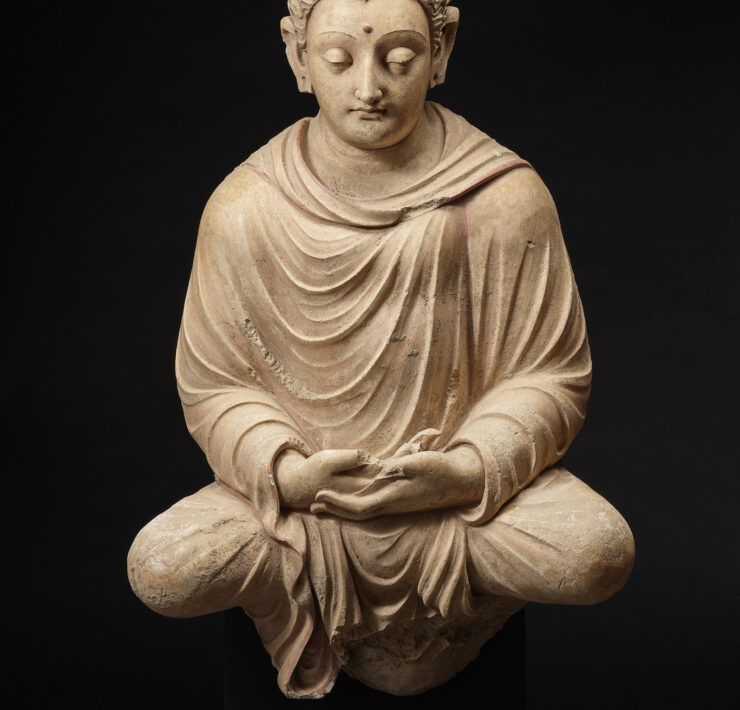
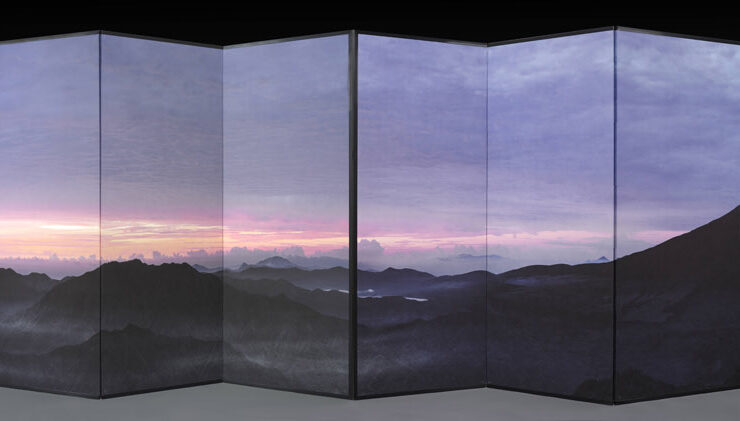
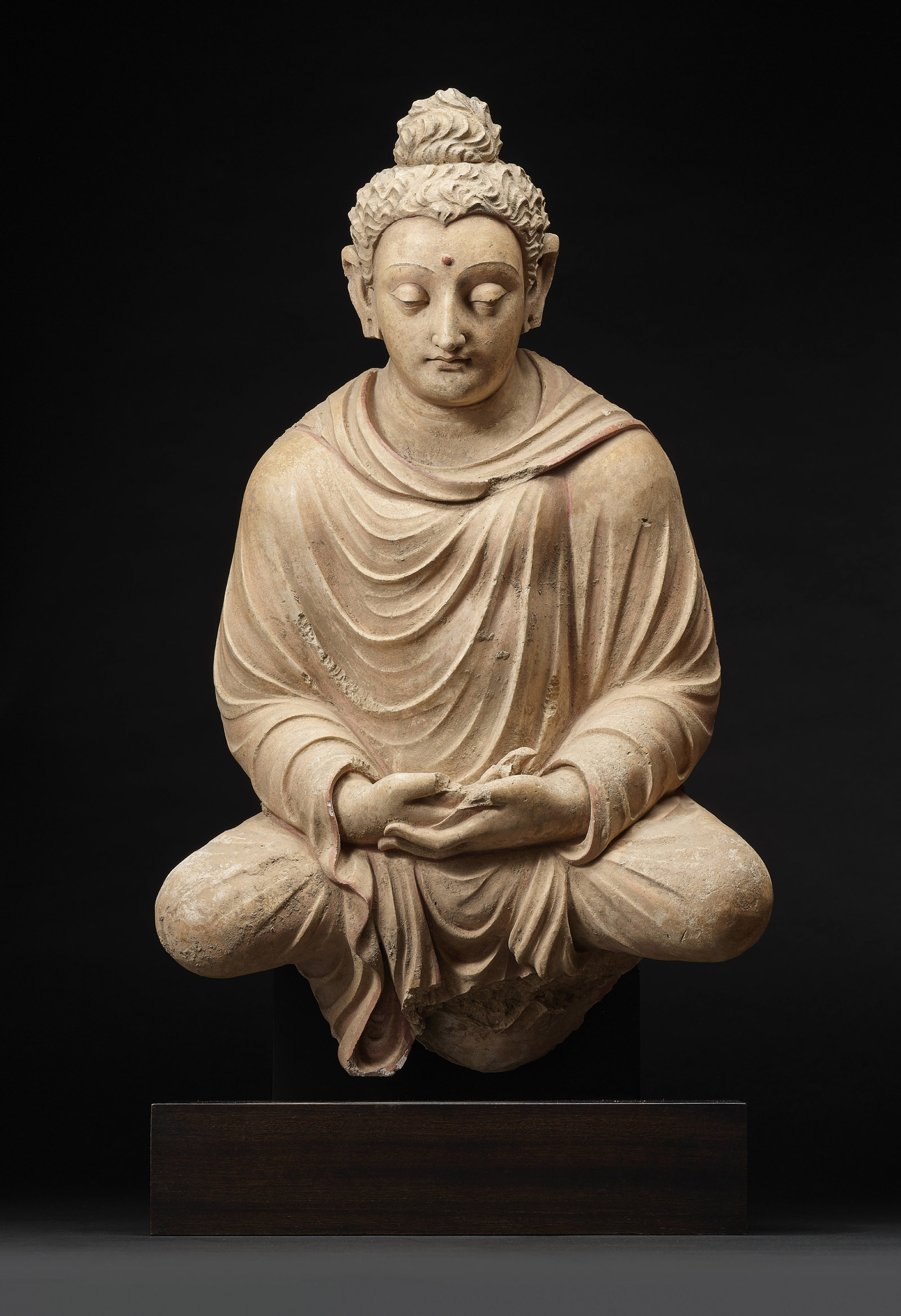
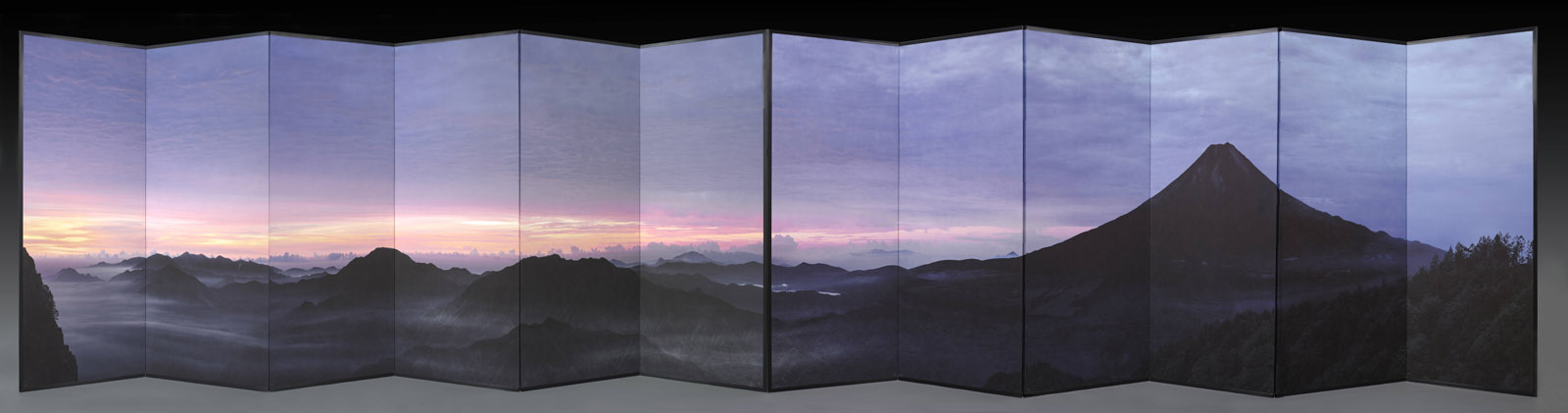
Among Buddha’s central teachings is impermanence: the understanding that all things arise and pass away. Today, we can observe impermanence unfolding through the shifting landscapes of our natural world. Here, Hiroshi Sugimoto’s panoramic view of Japan’s iconic, sacred Mount Fuji unfolds across a 25-foot expanse of traditional folding screens. The artist has captured the moment at dawn as the sun’s first rays cast warm red and orange hues behind the mountain’s looming silhouette. Yet the volcano could explode at any time, turning a symbol of permanence into a reminder of inevitable change. The monumental work is presented along with a 5th-century, stucco meditating Buddha from ancient Gandara, the region of today’s Afghanistan,
Gallery 3: Karma
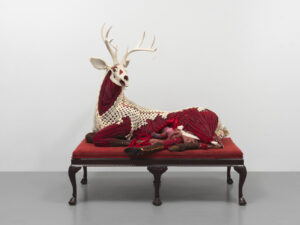
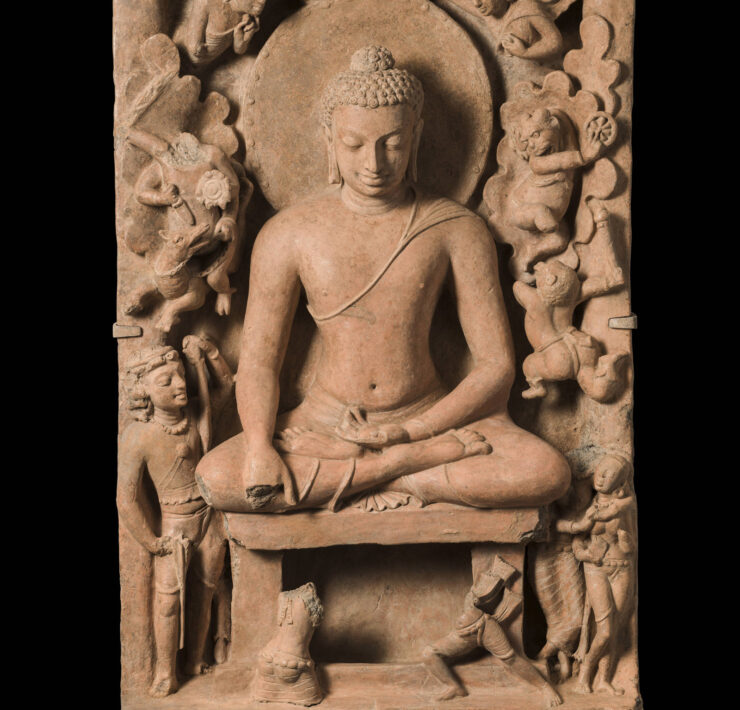
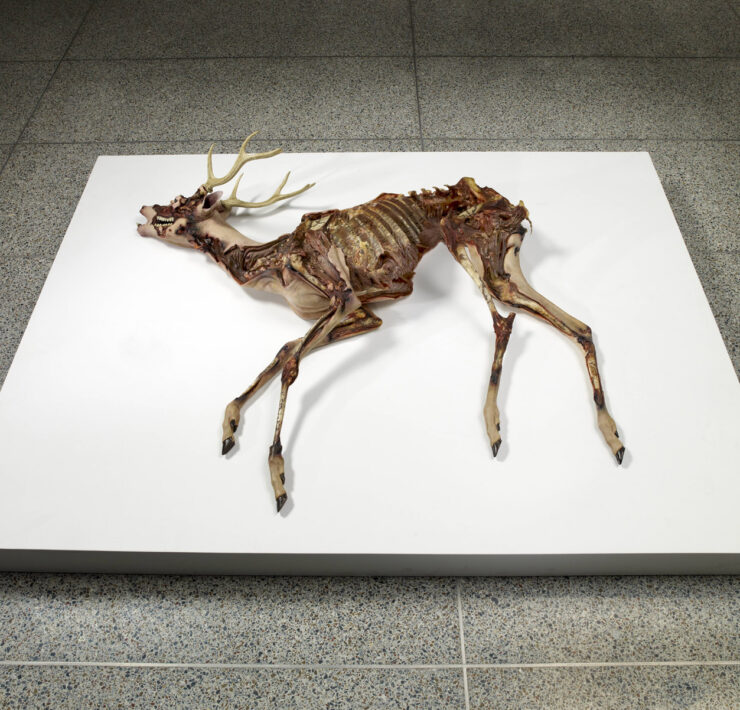
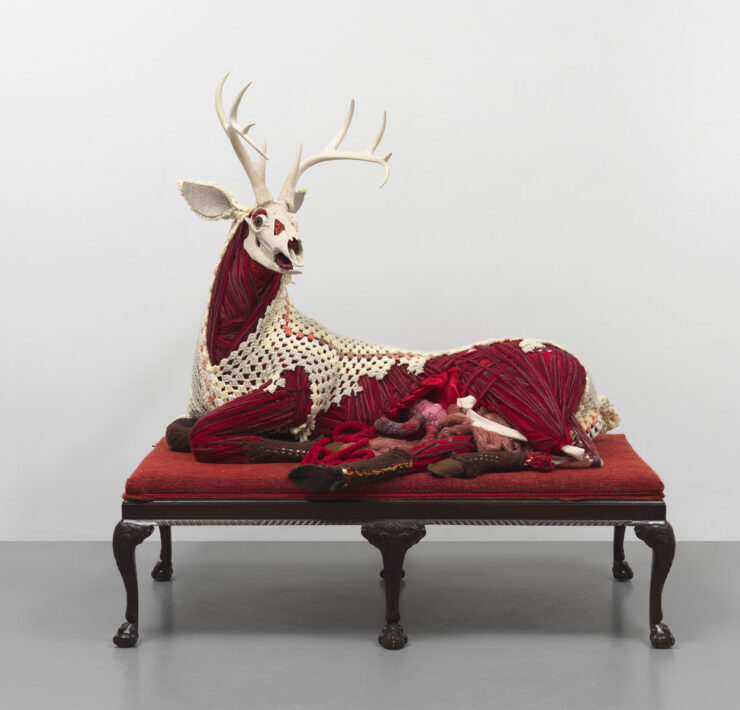
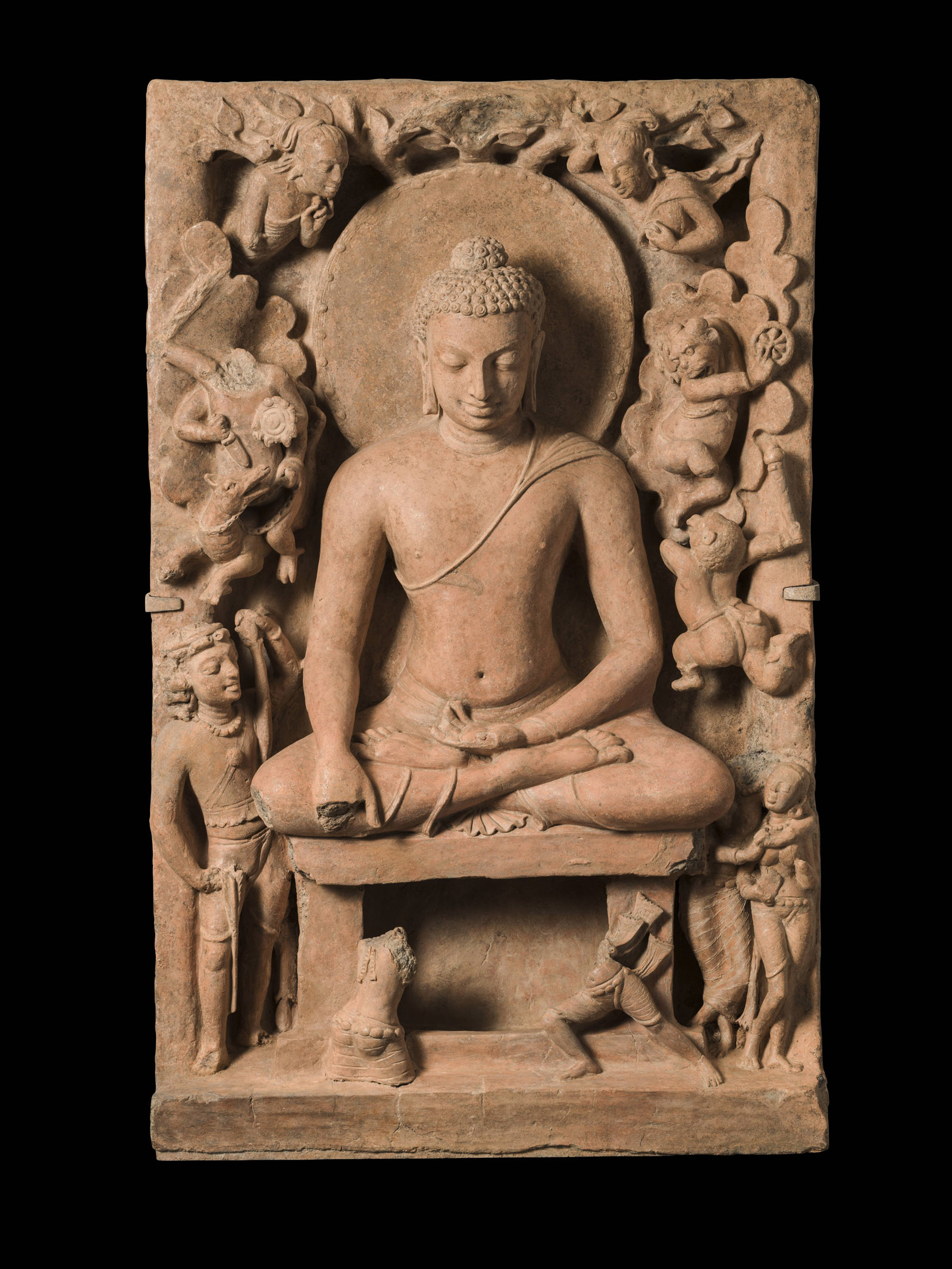
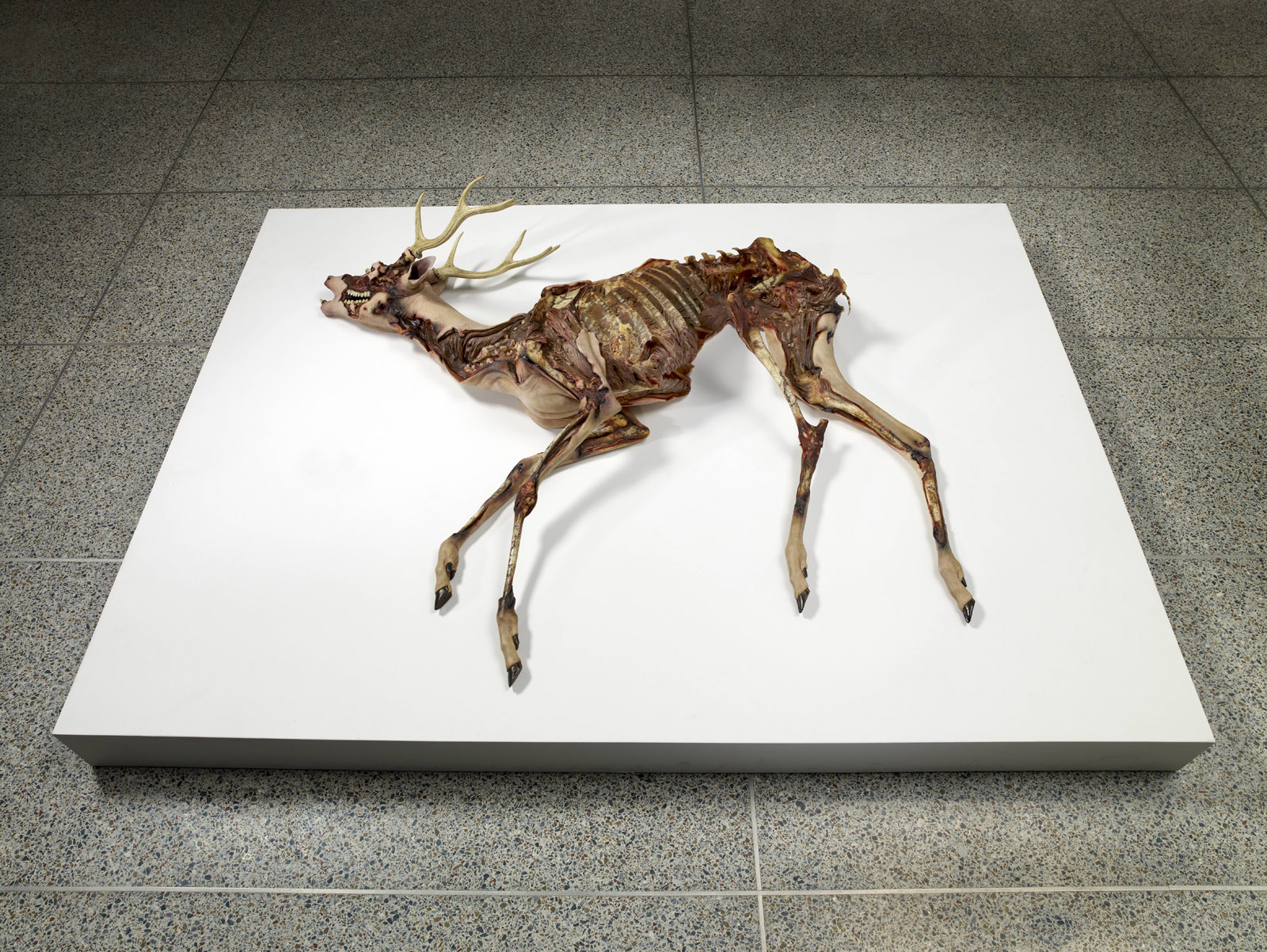
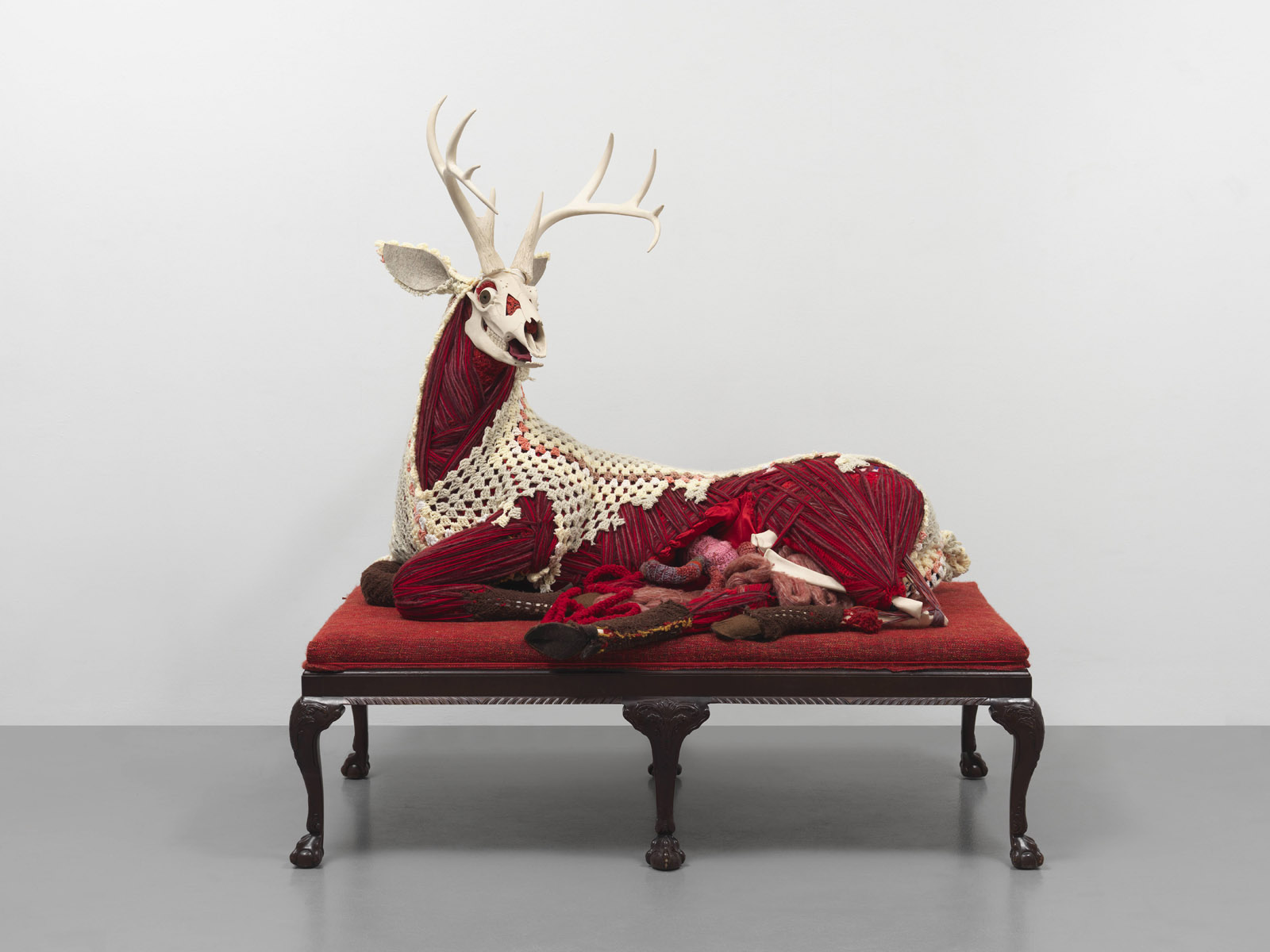
Karma is action—the law of cause and effect, in which past deeds and patterns of thought shape the present. By examining the choices that brought us here, we gain clarity to consider what comes next. Here, a large terracotta plaque of Buddha from 6th-century India depicts an iconic moment in the life of the Buddha: Buddha reaches his right hand to the earth, asking the earth goddess to bear witness to his rightful claim of enlightenment, for he had lived countless lives with kindness, compassion and generosity. On either side of the Buddhist image are two contemporary artworks. Erick Swenson’s Ne Plus Ultra (2010) depicts a decomposing stag, its exposed bones etched with scrimshaw style maritime map from the time of exploration. Cannupa Hanska Luger’s (NO) stalgia (2020) is another deer, this one composed of crochet pieces sourced from Goodwill stores; someone’s treasure, eventually abandoned. The pairing presents two contrasting visions of humanity’s relationship with nature. Swenson’s stag, etched with colonial-era maps of exploration, embodies attitudes that saw the earth as infinite resource to be dominated and exploited. Luger’s work honors Indigenous principles of coexistence and renewal—using what exists, wasting nothing. Karma reminds us we are not bound by past paths. The future is being shaped now by the choices we make.
Gallery 4: Compassion
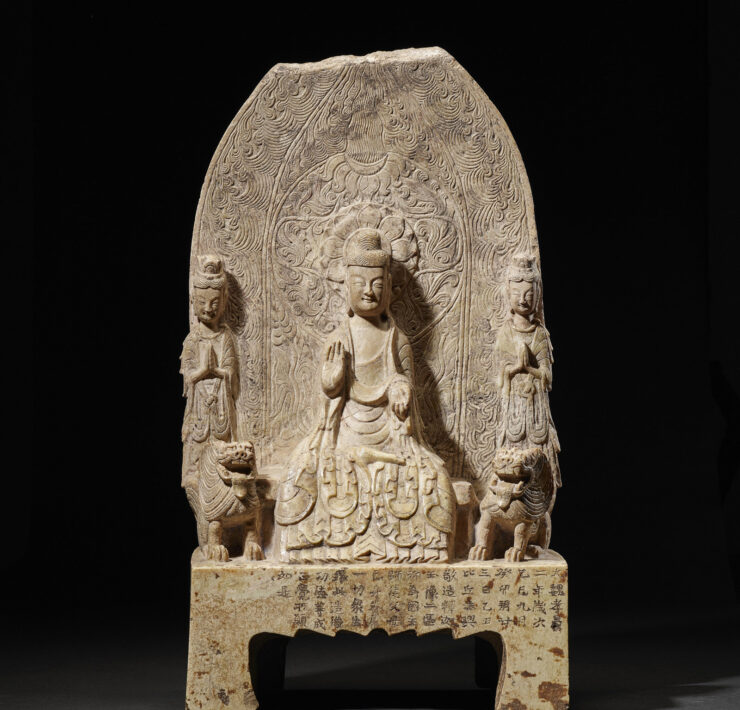
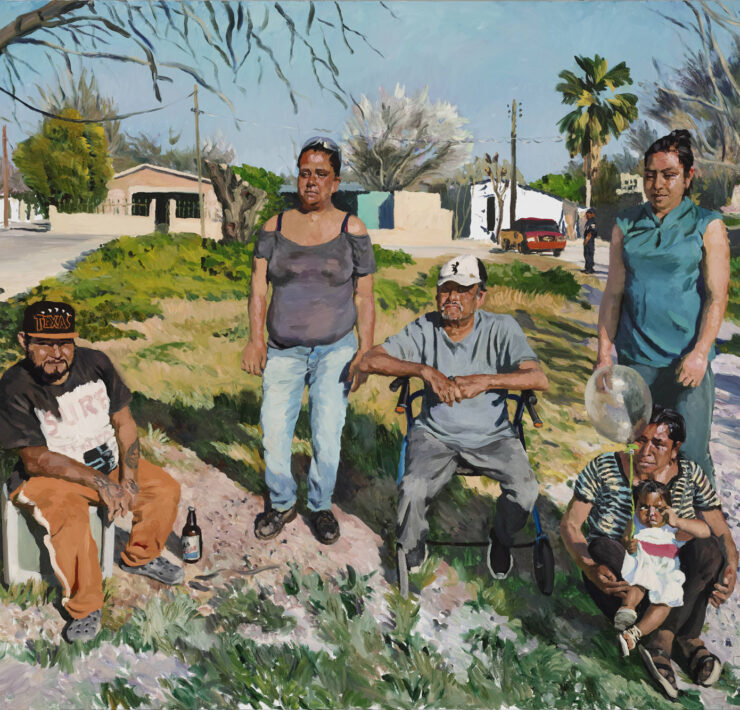
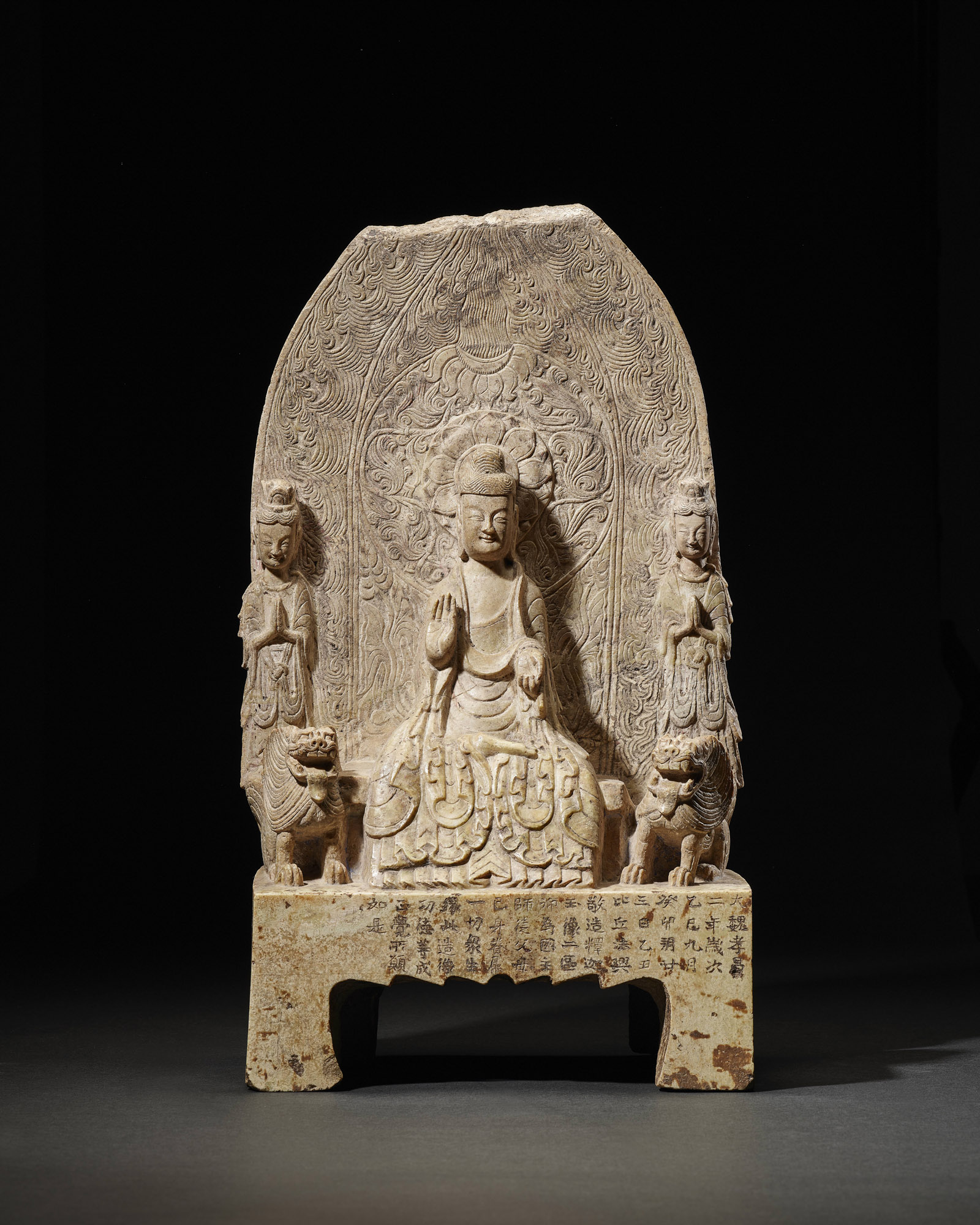
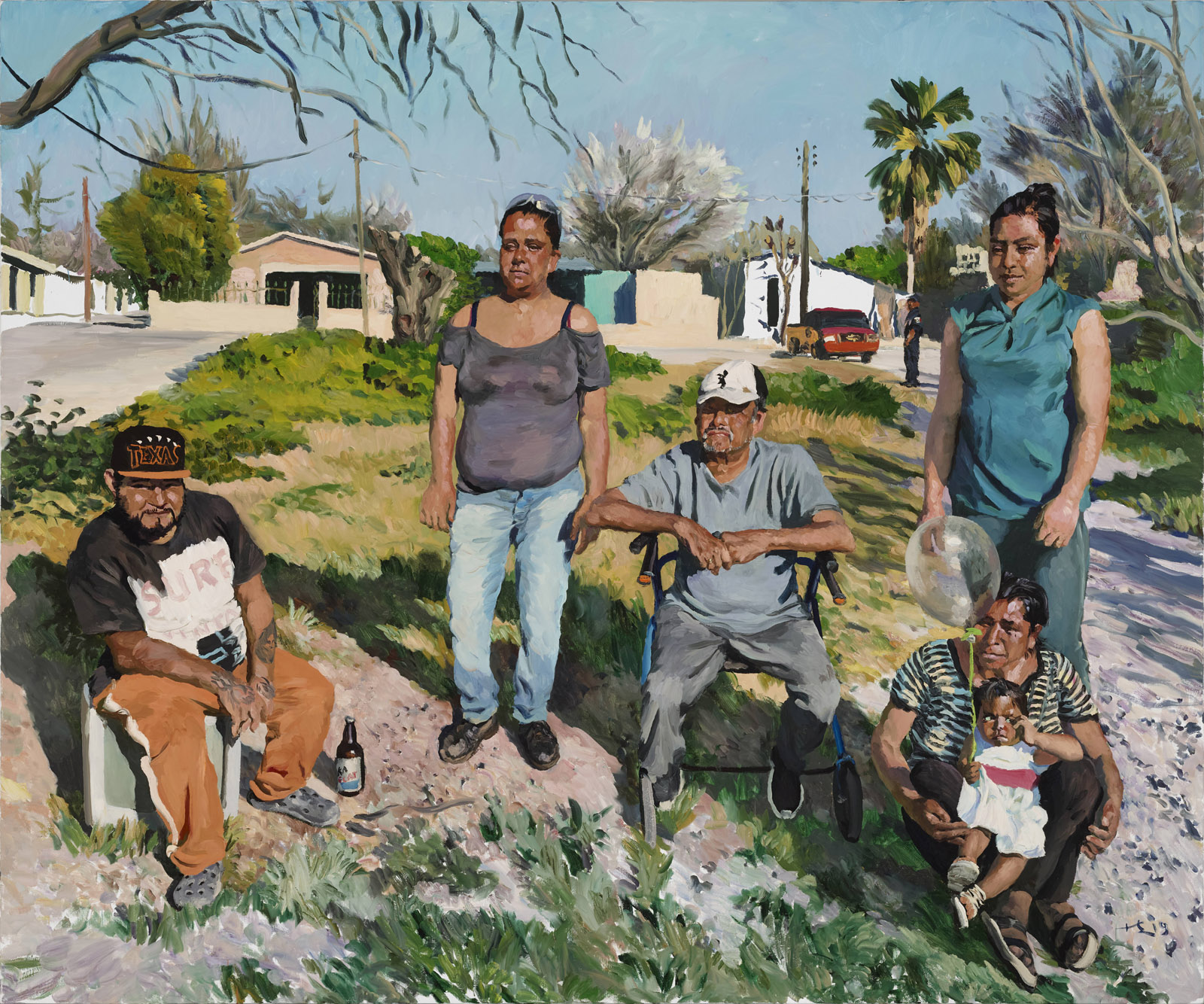
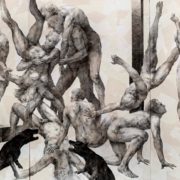
Compassion involves looking beyond ourselves to nature’s diversity and to the future generations who will inherit this Earth. By recognizing every creature within the web of life, there is an opportunity to transform indifference into the care necessary to support a changing world. Here a 6th-century Chinese stone carving depicting a triad of compassion, with Buddha and two Bodhisattvas, is flanked by two large-scale paintings by the Chinese artist Liu Xiaodong, who portrays the people he encounters in the turmoil of conflict zones. A Mexican Family, the Martinez (2019) depicts a migrant family he met in Mexico at the American border. Newcomers in the Village – Response to Manet (2021)—adapts the Impressionist’s famous Déjeuner sur l’herbe to assemble figures of friends and strangers – locals and outsiders alike that he has sketched in the familiar setting of his home province. All of those, both near and far, are worthy of his attention; painting becomes an act of bearing witness across cultural and social boundaries.
Gallery 5: Awakening
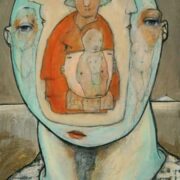
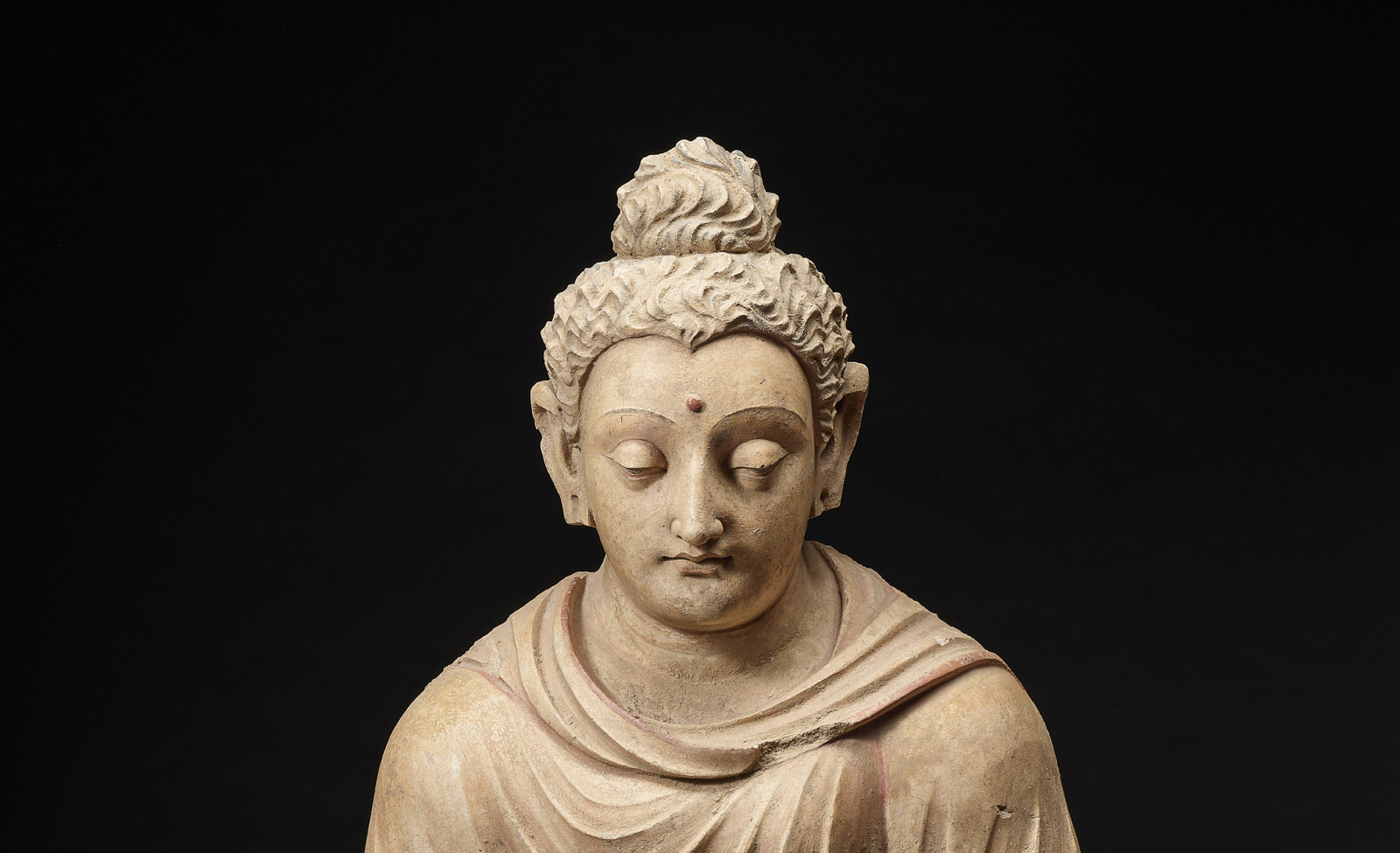
The exhibition culminates in a consideration of the power of individual action. Chinese-born, Austin-based artist Beili Liu created her video installation Arctic Circle Mending / Snow Mandala (2022) in Arctic Norway. On a wall-size screen, the artist is a solitary figure in the snow in a dark parka, as she sits and concentrates on sewing stitches of red thread, finding peace and contentment, as she has said, in a cold and unfamiliar territory. Her video installation, together with the sewn Snow Mandala, are paired with an 8th-century Chinese lacquer Buddha head, once carried through medieval streets where crowds gathered to behold its divine gaze. The artist’s daily effort reminds us that, just as a single drop of water eventually joins others to become a torrent, individual compassion mobilizes when shared with an ever-widening community. The Buddha head, once whole and now a fragment, reminds us that even what is broken retains power.
Organization and Funding
This exhibition is organized by the Museum of Fine Arts, Houston, and dedicated to the memory of Mr. Robert Hung Ngai Ho (1932-2025).
Major support is provided by: Jerold B. Katz Foundation