





















Francesca Fuchs’s Show at the Menil Collection: A Few Comments


 +5
+5 Francesca Fuchs’s Show at the Menil Collection: A Few Comments
Francesca Fuchs’s Show at the Menil Collection: A Few Comments
Francesca Fuchs’s Show at the Menil Collection: A Few Comments
Francesca Fuchs’s Show at the Menil Collection: A Few Comments
Francesca Fuchs’s Show at the Menil Collection: A Few Comments
Francesca Fuchs’s Show at the Menil Collection: A Few Comments
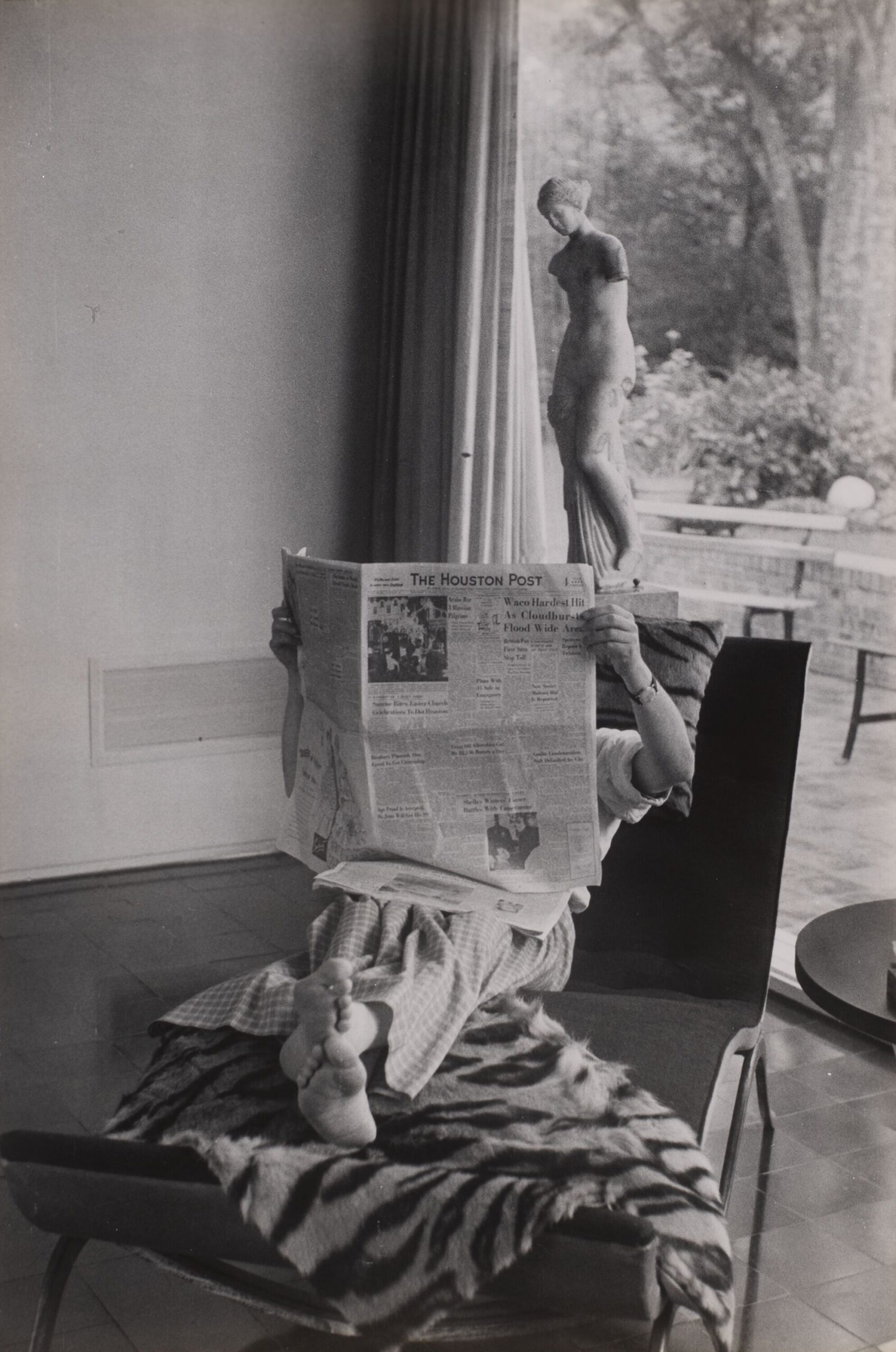
Henri Cartier Bresson, Untitled, 1957
(John de Menil in living room at 3363 San Felipe on Charles James chaise), 1957. Gelatin silver print, 13 3/8 × 9 in. (34 × 22.9 cm). The Menil Collection, Houston, Gift of the artist. © Henri Cartier-Bresson / Magnum Photos. Photo: Paul Hester
Source: Henri Cartier Bresson, Untitled, 1957Francesca Fuchs’s Show at the Menil Collection: A Few Comments
Francesca Fuchs’s Show at the Menil Collection: A Few Comments
Francesca Fuchs’s Show at the Menil Collection: A Few Comments
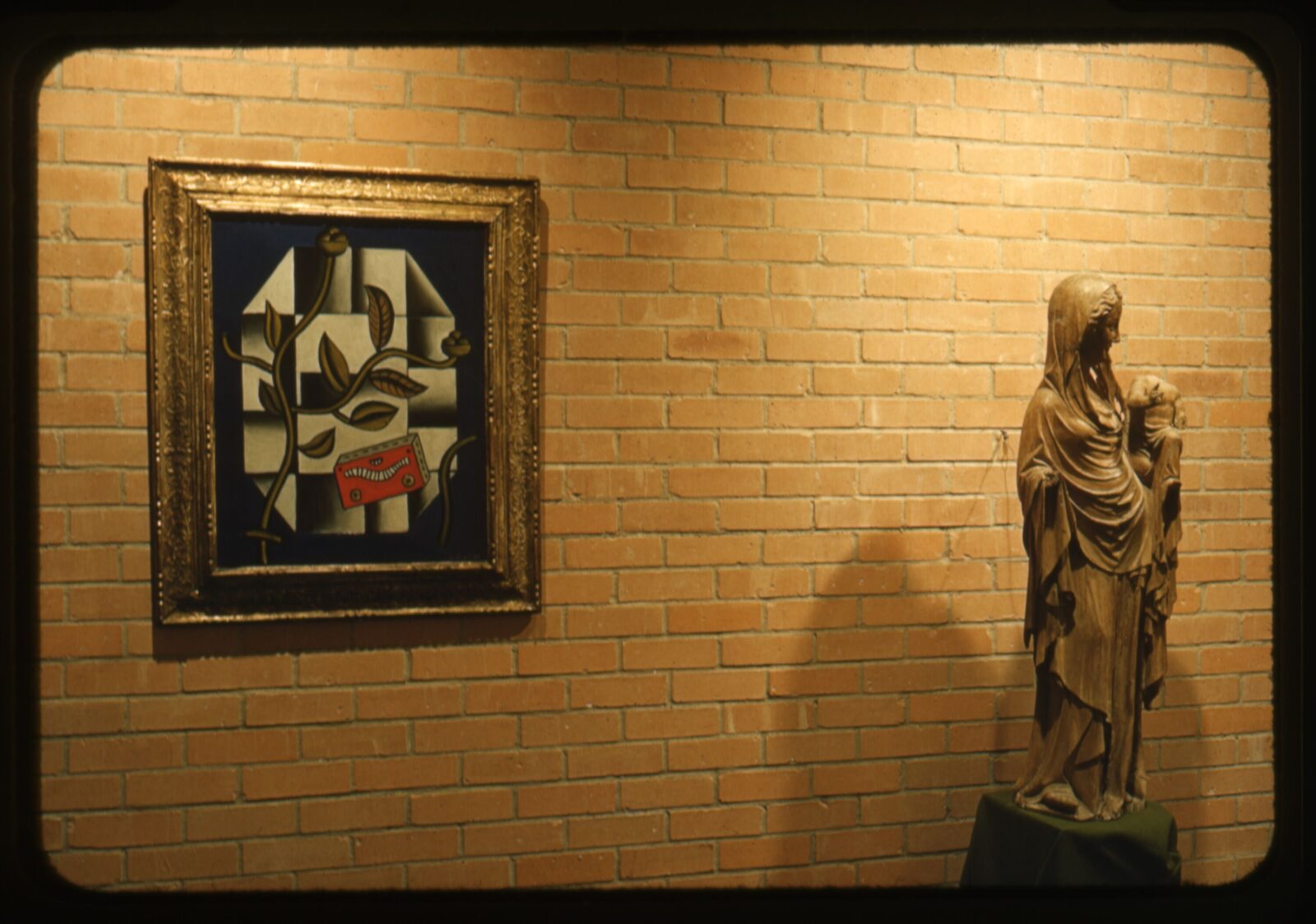
Only a few weeks left to see “The Space Between Looking and Loving: Francesca Fuchs and the de Menil House” at The Menil Collection. The show ends November 2, 2025.
If you don’t already know the story, a hell of a coincidence spurred Houston artist Francesca Fuchs’s Menil exhibition. Here’s how Menil Curator of Collections, Paul Davis described the event:
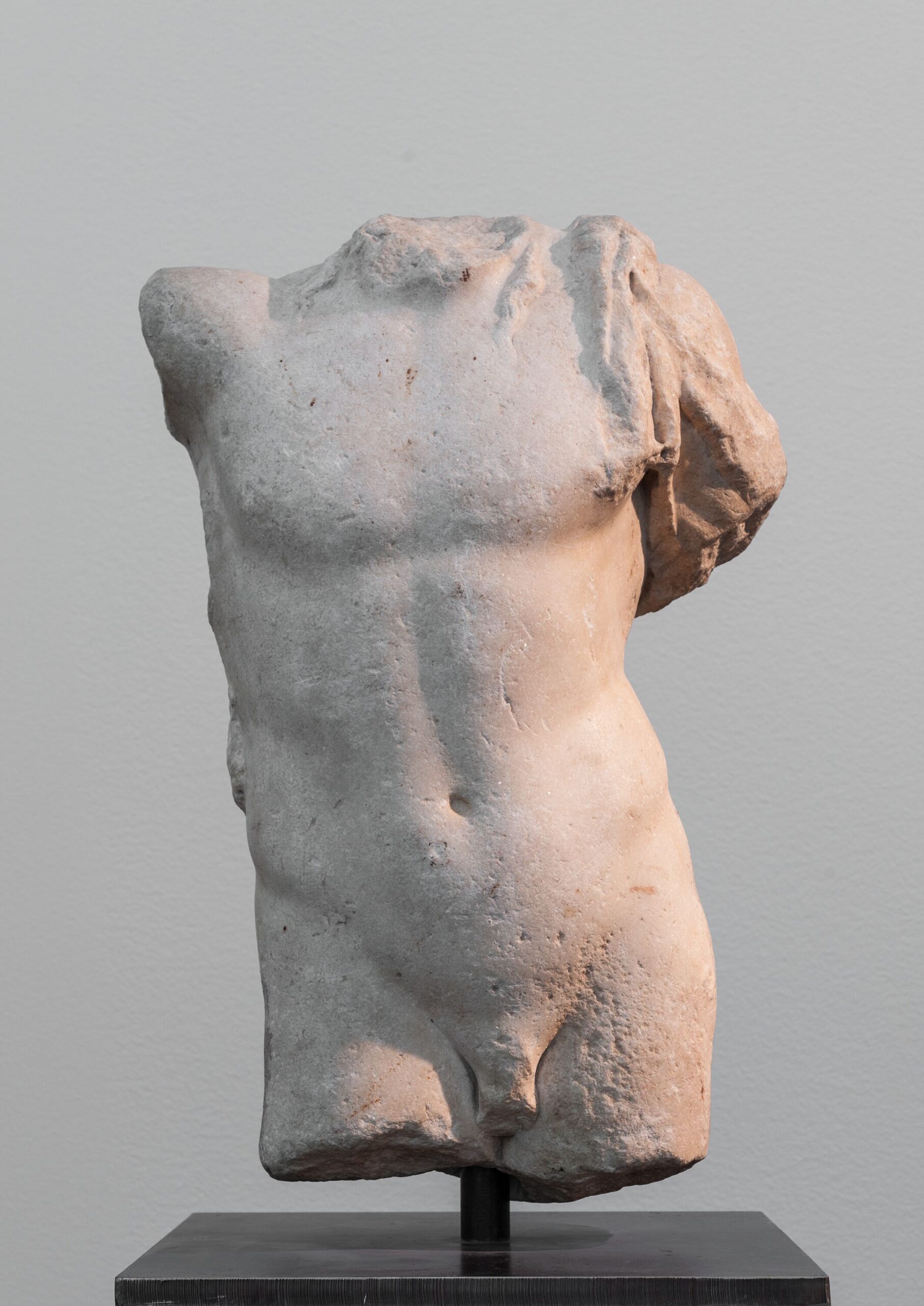
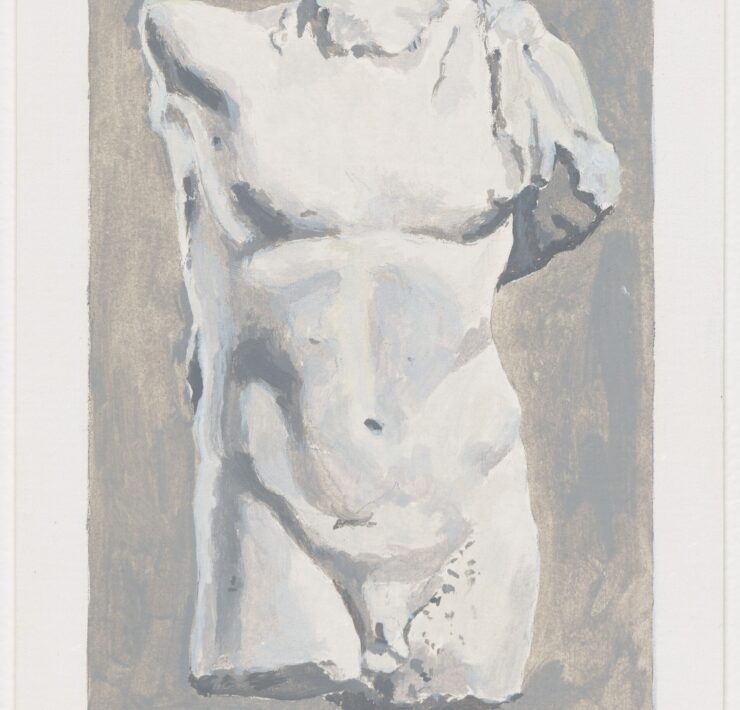
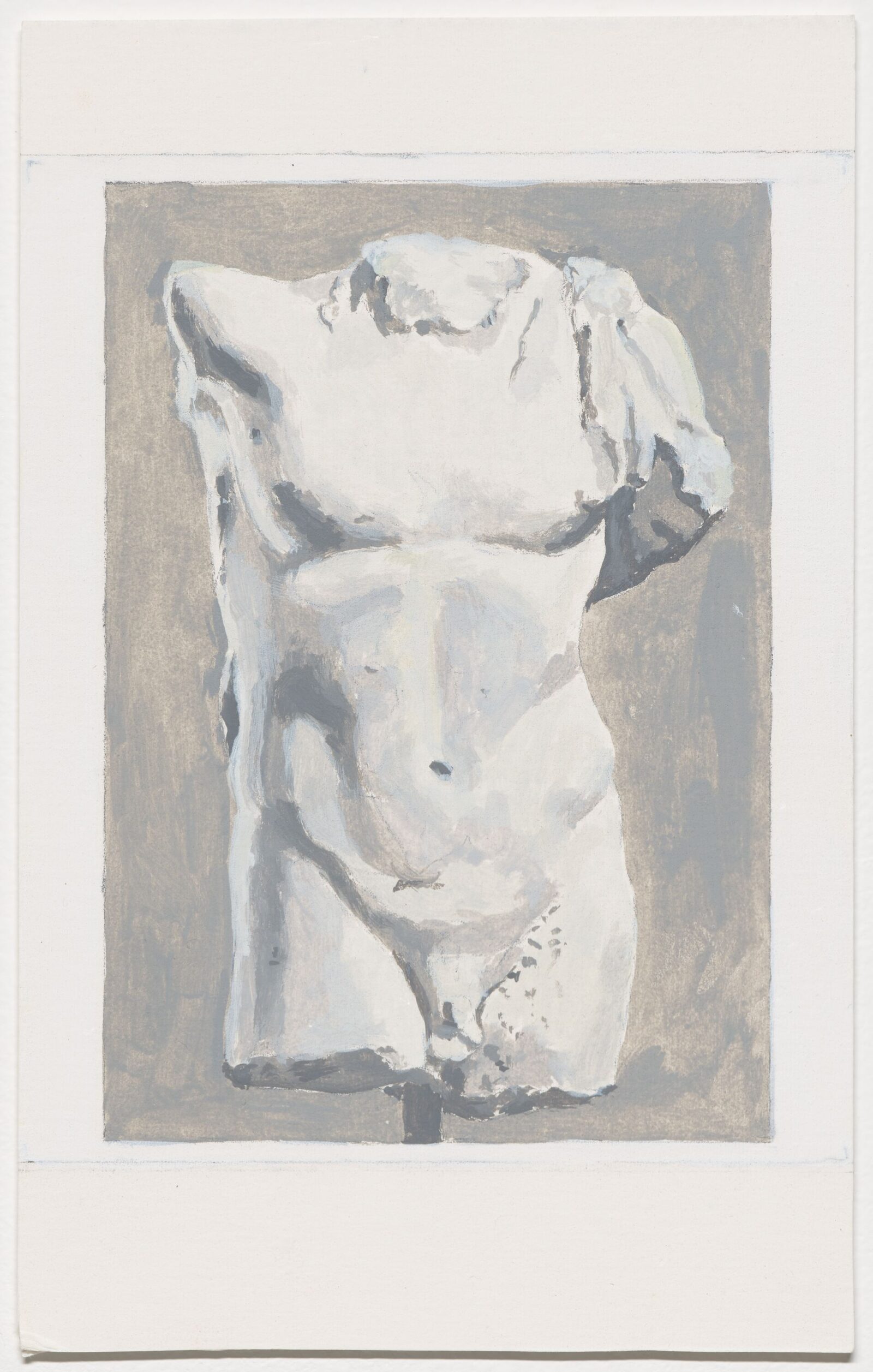
“In 1970, the Menil’s cofounder John de Menil wrote to German classical archeologist Dr. Werner Fuchs (1927–2016) seeking to identify the subject of a Roman male torso in his collection. Was it a statue of Apollo or Dionysus? Forty-nine years later, Fuchs’s discovery of black-and-white photographs depicting the marble torso in her father’s personal effects in Oxford, England, prompted the artist to find the original letter in the Menil archives. This exhibition is the artist’s response to John de Menil’s unanswered letter.”
I want to comment on the coincidence that bred this show. Fuchs unexpectedly stumbled upon a connection between her father and the Menil. Curator Paul referred to this surprise discovery as “serendipitous,” but maybe it was more than that. Sometimes we perceive an event as a deeply meaningful synchronicity that we need to pay attention to. Paying attention inexplicably directs us to signs and symbols that move us forward. With less filtering by the brain, we are attuned to the workings of consciousness, or to put it another way, recognize a soul’s path.
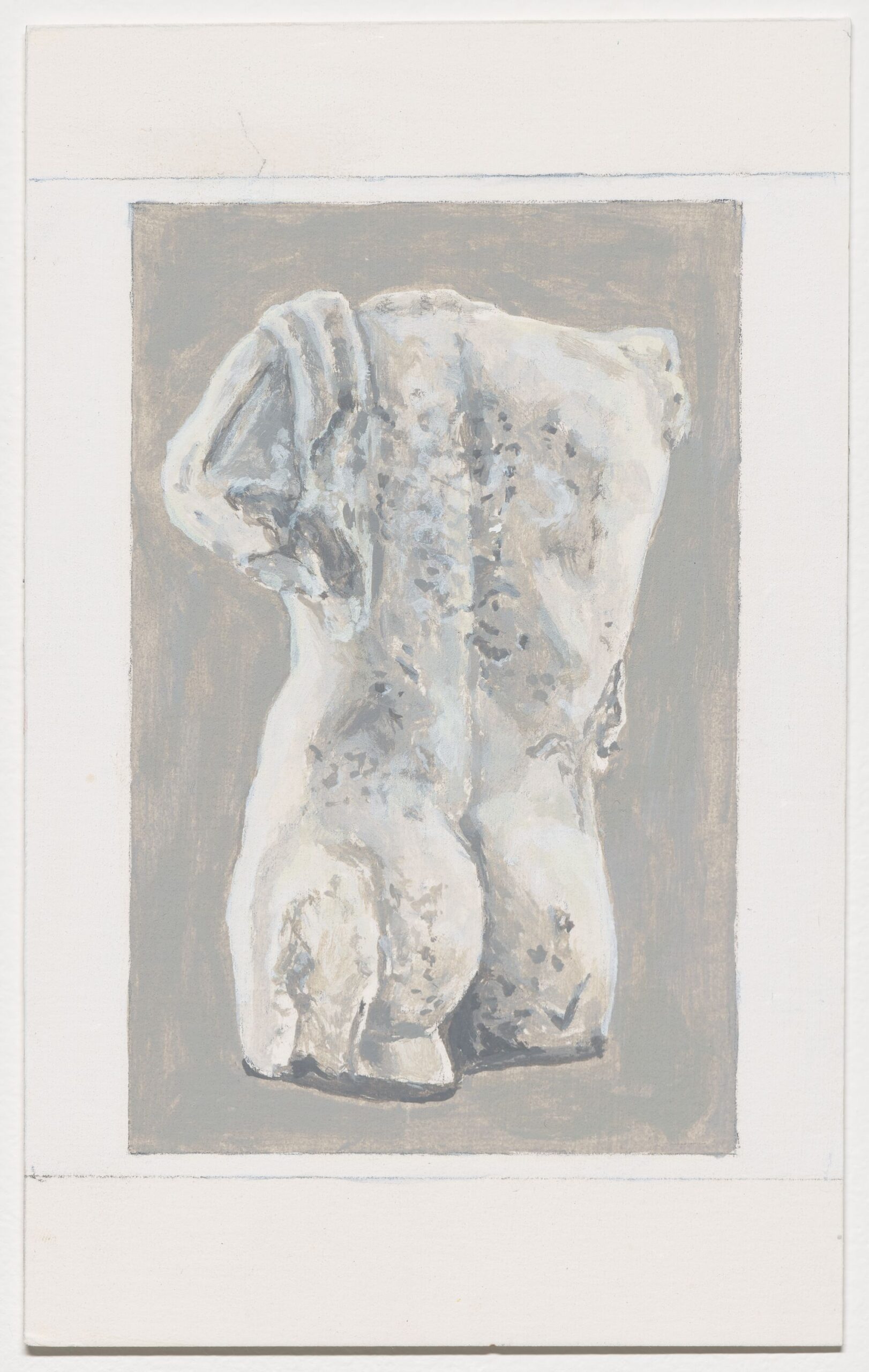
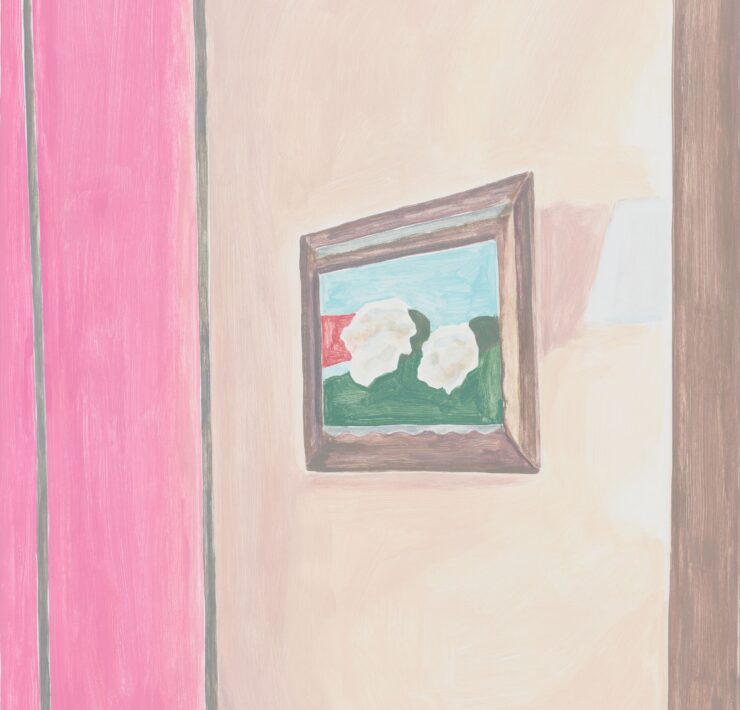
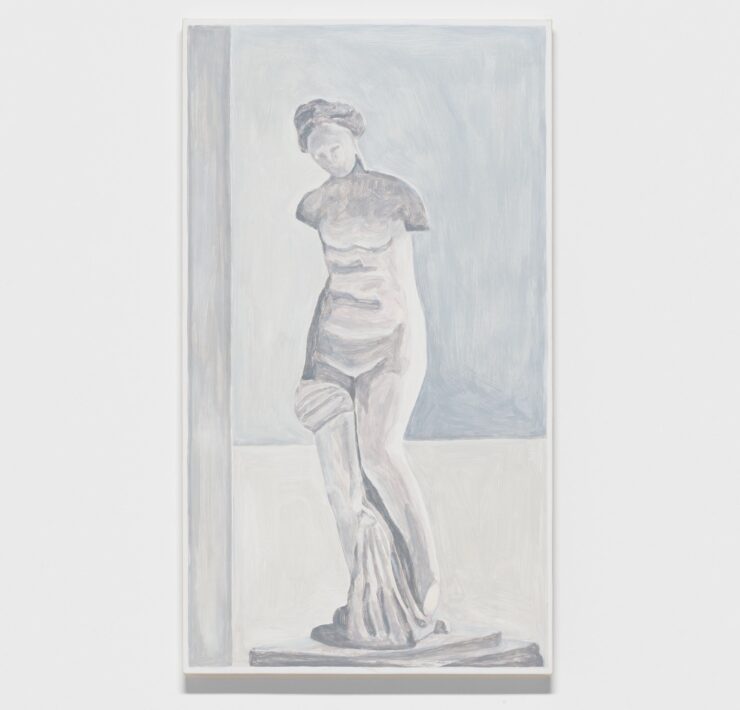
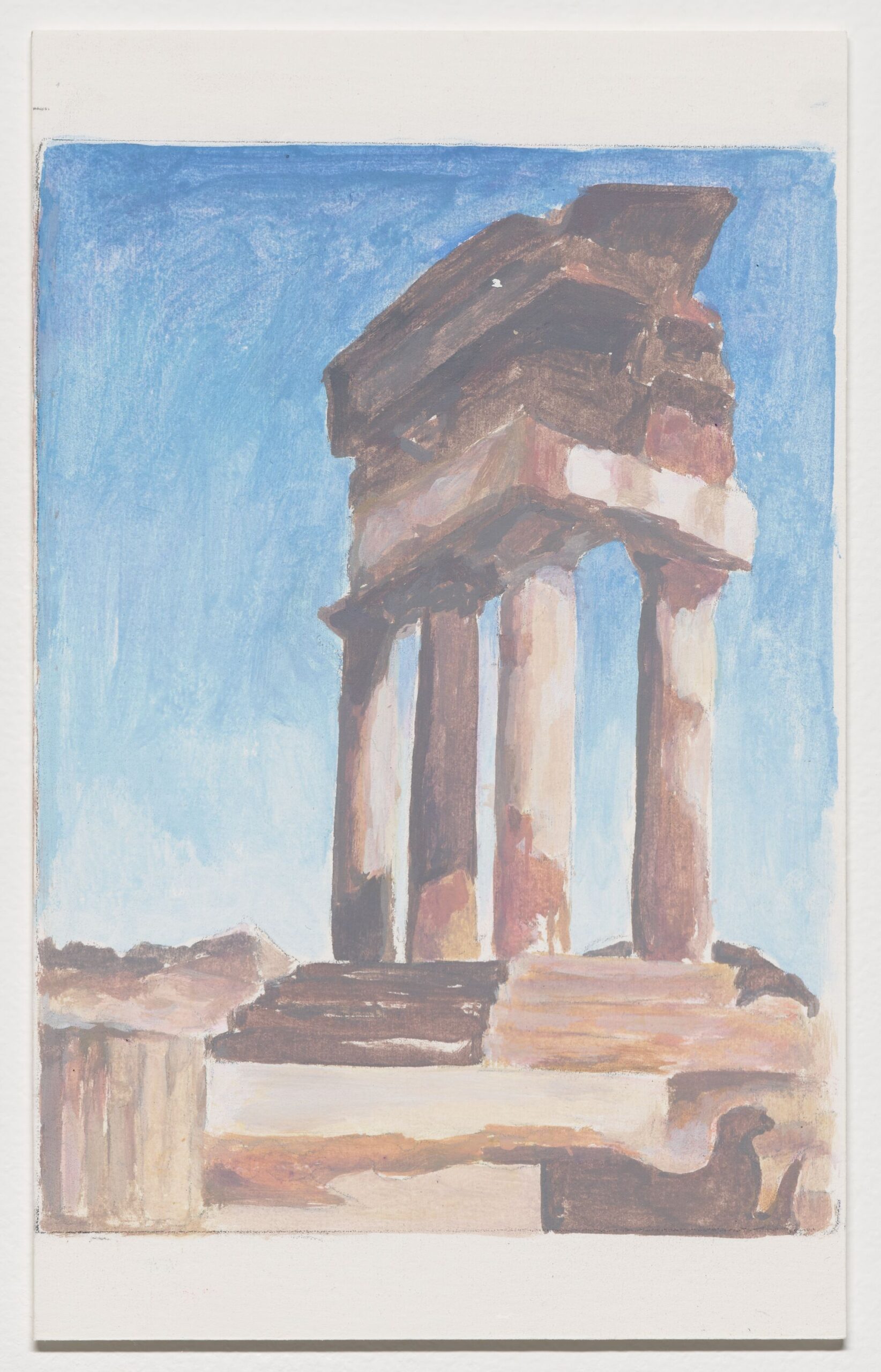
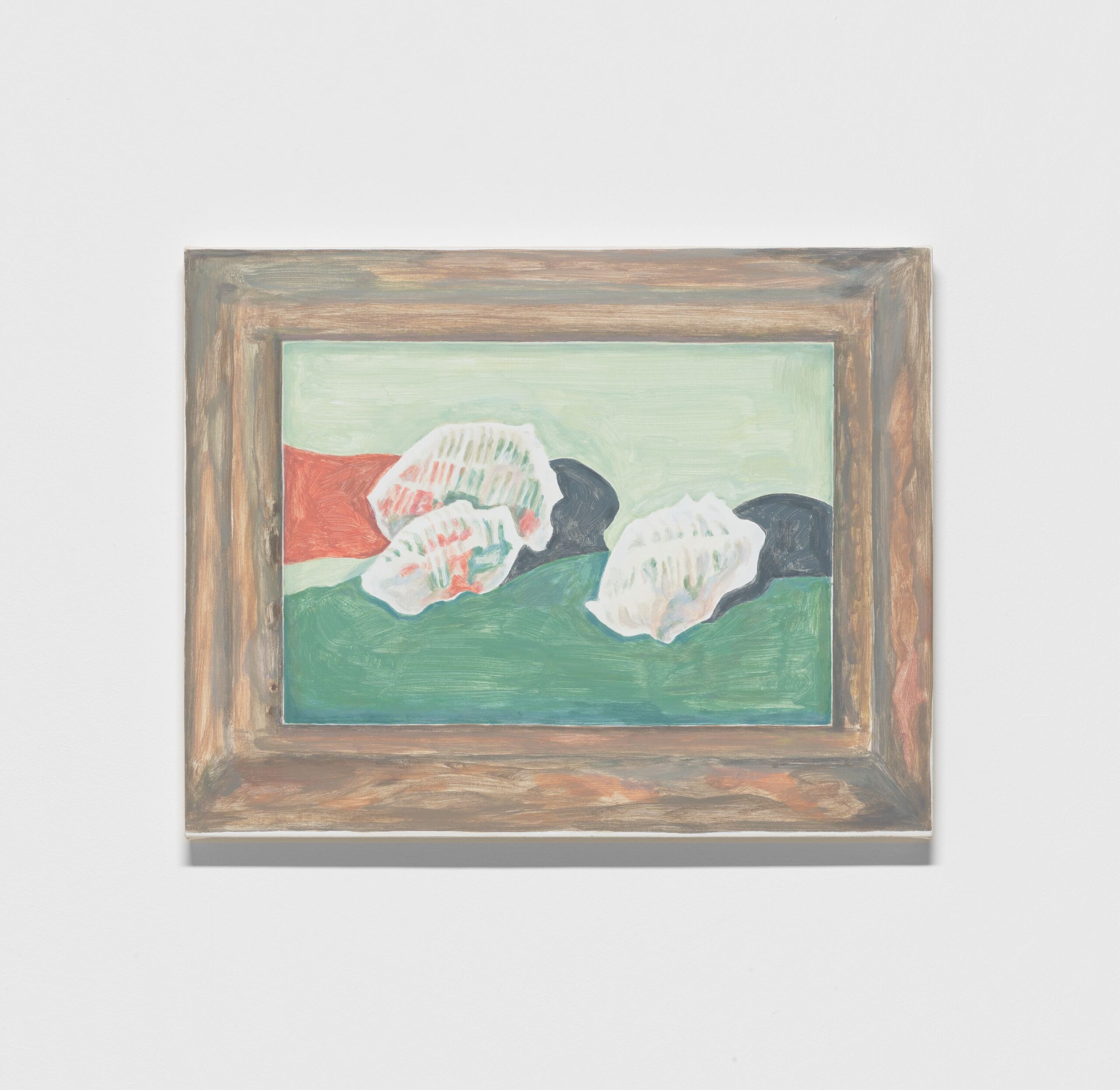
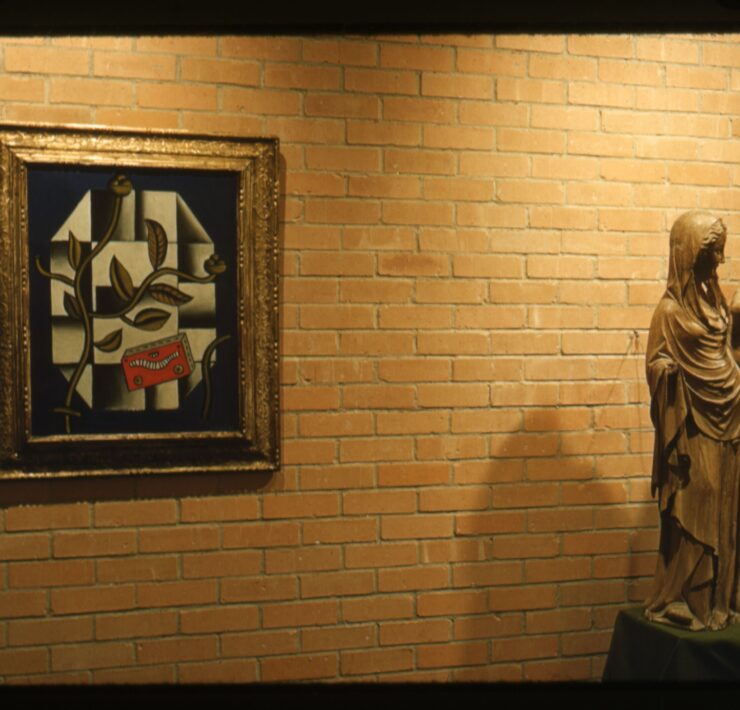
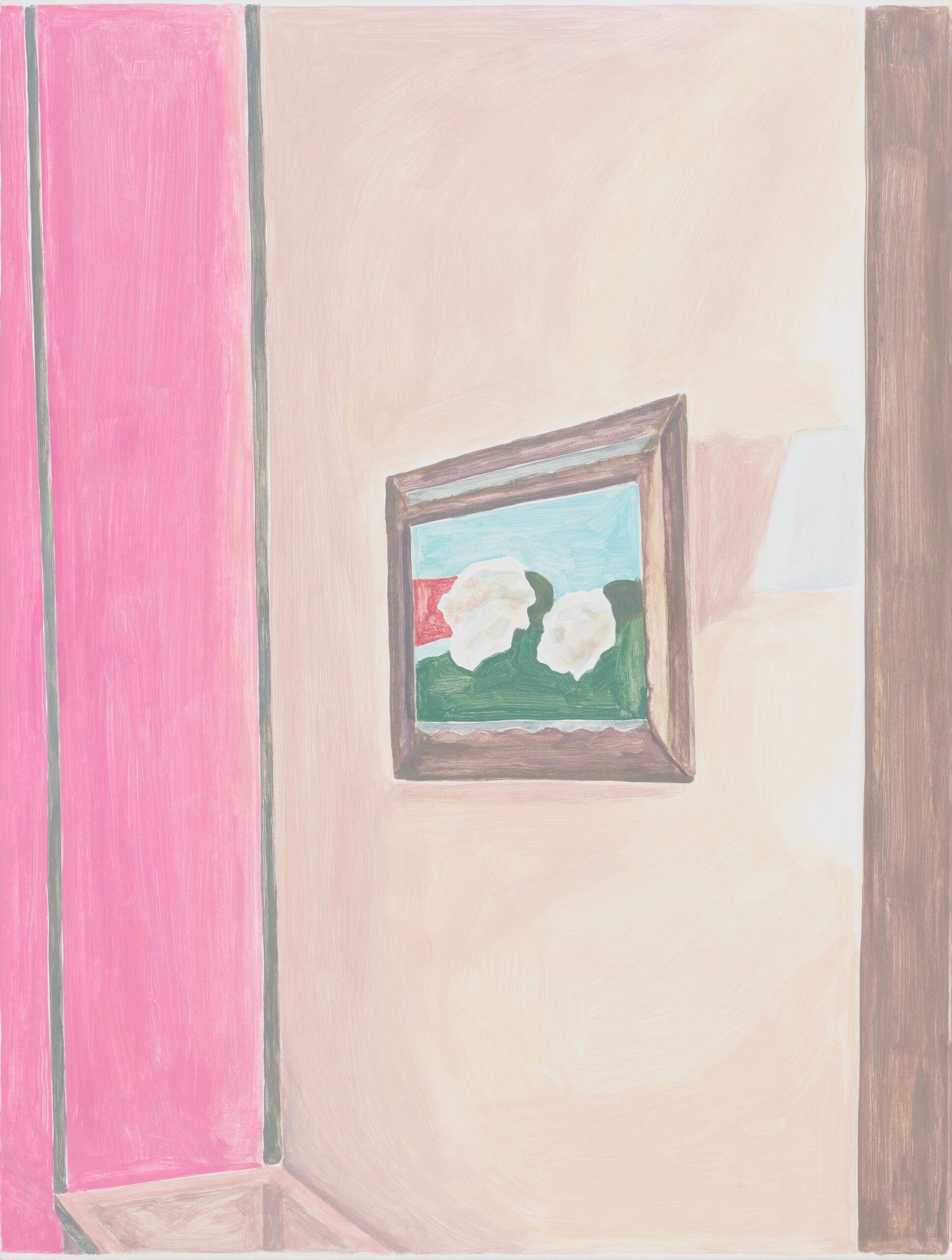
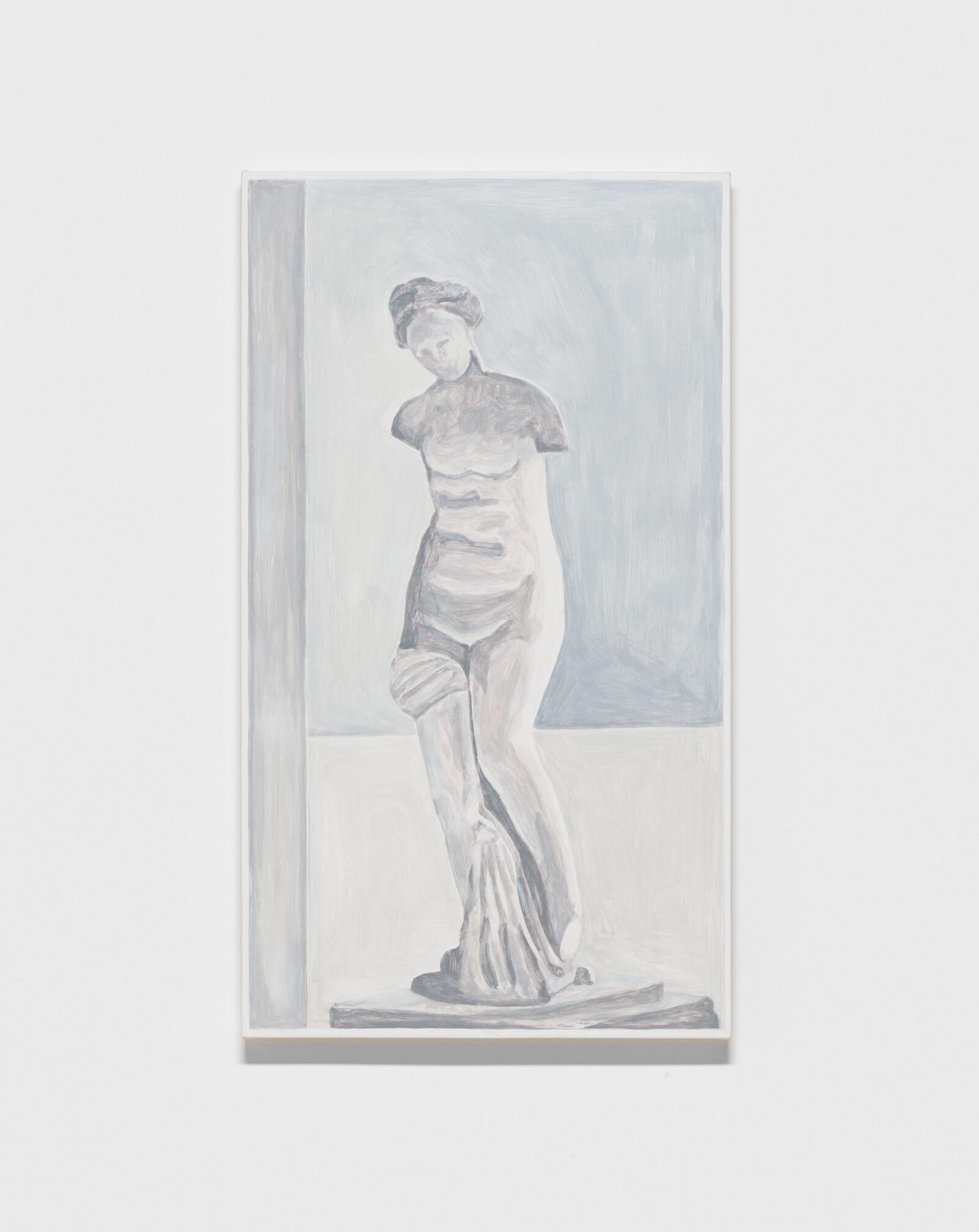
Fuchs paid attention. She studied the marble statue, as well as the letter written to her father in the Menil archives, as well as photographs of interiors of the de Menil home with artworks, and she spent time in the home. She made paintings. Her paintings don’t solely replicate objects. They capture their essence, “what is felt, not seen,” and in fact Fuchs told us at the preview that instead of duplicating she expresses emotions or energy. She meditates on objects in domestic spaces, because domestic spaces are where we live and love and die. Some will laugh, but it’s possible the meaningful coincidence that ultimately lead to this show involved more than chance.
I wanted to know more about the marble statue underpinning this show. A focal point in the gallery, it inspired two of Fuchs’s paintings. So I dug up the Menil’s collection notes:
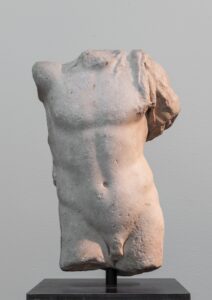
“Torso of Apollo or Dionysos” is an Imperial Roman marble statue dated 1st-2nd century. “This fragmentary sculpture represents the torso of a male figure with long hair. He is nude other than the edge of a cloak, known as a chlamys, draped over his left shoulder. Although the sculpture is broken at the neck, arms, and upper legs, portions of the extant limbs indicate he stood in a pose known as contrapposto with his weight shifted onto his left leg, creating a subtle “s” curve in his body position. His right arm was lifted, and the breaks underneath the arm along that side suggest another figure was part of the sculpture. Another area of rough surface behind the left leg indicates a support of some variety, which usually took the form of a tree trunk. The plump body form suggests the sculpture was created in the early Roman Imperial period, possibly around the reign of Hadrian (117–138 CE). The identity of the figure is still a matter for debate: it could represent Dionysos, perhaps leaning on a small satyr, or possibly Apollo, another youthful god depicted with long hair. Sculptures such as this were common decorative elements in homes, gardens, and public buildings, such as bathhouses, but were also appropriate as votives in sanctuaries.”
I also wanted to know more about Fuchs’s father. Werner Fuchs was an archaeologist and professor of archaeology who studied classics, archaeology, and the history of ancient art and philosophy at the Universities of Leipzig and Tübingen. He received his doctorate from Tübingen in 1953. His work often had him in Greece and Italy, but it is particularly interesting that from 1954 to 1957 he excavated at ancient Olympia alongside Emil Kunze who played a significant role in discovering the ancient sculptor Pheidias’ workshop. Dr. Fuchs published on Greek sculptures and carved reliefs. He ended his career in Oxford. Not surprising John de Menil turned to him to identify a Roman statue that mimicked the style of a Greek statue. Fuchs told us that when she was a kid she didn’t realize her father’s collection of antiquities was a big deal. She darted past his carved stele unaware. He also had a head of Augustus. The kid was oblivious, although I would bet money the kid understood that her father loved living with his carved stele and head of Augustus.
One more point. You’ll find no mention of Fuchs’s skill. You’ll hear about truth of representation and collapsing of time, but not about technical proficiency or mastery, because that’s a no-no. You’re not supposed to care about skill in contemporary art. But I’m not in contemporary art so I don’t care about the party line. Unmitigated skill.
www.menil.org