



















Frida: The Making of an Icon at the Museum of Fine Arts, Houston


Frida Kahlo didn’t die in 1925 like other passengers when a trolley car collided with the bus she rode. She did suffer crippling injuries, an iron rod penetrated her pelvis and there were fractured bones throughout her body. After regaining mobility the next year she began to paint, and despite unimaginable health problems including the foot gangrene that hastened her 1954 death, she produced over a hundred paintings and numerous drawings. While alive, Kahlo was comparatively unknown and pretty much in the shadow of her famous artist husband Diego Rivera. After her death however her fame hit the roof. Now Kahlo is an icon.
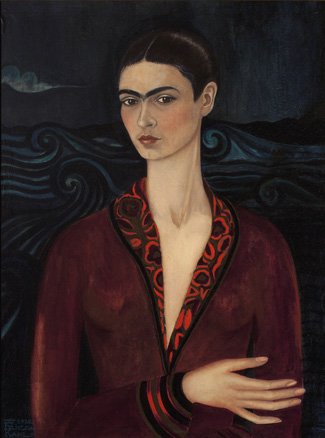
The Museum of Fine Arts, Houston gave Intown a sneak peek at a 397-page catalogue that accompanies the exhibition “Frida: The Making of an Icon” which opens January 19. After describing the handbags, t-shirts, coffee mugs, jigsaw puzzles and refrigerator magnets that have Kahlo’s name, image or artwork on them, essayist Arden Decker writes: Kahlo’s ubiquity within our cultural and commercial landscape can easily be taken for granted, as if she has always been part of popular culture. There are precious few visual artists who have risen to this level of global appeal and celebrity status. Vincent van Gogh, Andy Warhol, Salvador Dali, and, more recently, Yayoi Kusama are among the exceptions, but none have been appropriated and commodified to the same extent as “Frida.”
In her catalogue essay titled “Fridamania,” Museum curator Mari Carmen Ramírez says, “the commodification of Frida is not limited to her art but extends to every aspect of her physical appearance, character, and garb, launching her as the equivalent of a “global brand.”
Here’s what the Museum wants you to know about the show:
Curated by Mari Carmen Ramírez and organized by the Museum of Fine Arts, Houston, the ambitious exhibition “Frida: The Making of an Icon” traces Frida Kahlo’s posthumous transformation from relatively unknown painter to global brand.
Featuring 35 works by Frida Kahlo that capture the arc of her artistic legacy, “Frida: The Making of an Icon” presents Kahlo and her art within the context of works by five successive generations of artists: painters, sculptors and photographers from an array of artistic and social communities and movements, who mined Kahlo’s paintings and personal history to claim her as their own. “Frida: The Making of an Icon,” travels to the Tate Modern, London, after its premiere in Houston.
Key contributions from the archives of the Documents Project of the ICAA (International Center for the Arts of the Americas) at the MFAH and Museo Frida Kahlo in Mexico City will be featured. Photographs and archival material, including the artist’s clothing, jewelry and other personal items culled from Kahlo’s personal collections and other sources, provide additional context for the artworks.
“Frida: The Making of an Icon” will address how artists across five decades have responded to Kahlo’s work and appropriated it: from Kahlo’s Surrealist contemporaries of the 1930s to the communities within the Chicana/o movement of the 1970s, Mexico’s and the U.S. feminist and gay rights activism of the 1980s and 1990s and the identity-focused generations of more recent decades. A gallery of the exhibition will be devoted to “Fridamania,” displaying more than 200 objects generated by the global, mass-market production of Frida Kahlo merchandise.

Comments Gary Tinterow, director and Margaret Alkek Williams chair of the MFAH, “This Museum has been at the forefront of Latin American art since the founding in 2001 of the International Center for the Arts of the Americas. While there have been numerous Frida Kahlo exhibitions around the world since the 1970s, Mari Carmen Ramírez has leveraged the unparalleled resources of our ICAA to document and assemble a fascinating group of objects that attest to the enduring appeal of Kahlo’s art and life.”
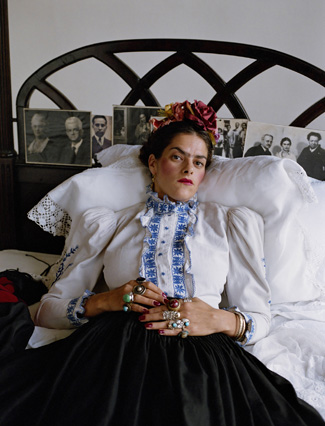
“Frida: The Making of an Icon” attempts to separate Frida Kahlo the artist from Frida Kahlo the phenomenon,” says Mari Carmen Ramírez, Wortham Curator of Latin American Art at the MFAH and founding director of the Museum’s International Center for the Arts of the Americas (ICAA). “The exhibition reveals how the different facets of Kahlo’s complex persona(lity), which she so carefully crafted and projected, were adapted again and again over her decades-long transformation into an icon. As a result, her image became subsumed within the desires, fears and hopes of artists and activists who transformed it into innovative proposals that transcend their source of inspiration while commenting on pressing issues of their place and time. In exploring that process, the exhibition re-establishes Kahlo’s own identity, and asserts her persistent relevance to contemporary art as well as activism over the past 70 years.”
Accompanying the exhibition at the MFAH will be a film program, family and community events, and a “Talking Frida” series of conversations with international artists, curators and writers on the varied facets of Frida Kahlo’s legacy, on site and live streamed. Tickets for the run of the exhibition will be available as of October 28, 2025.
Organization and Funding “Frida: The Making of an Icon” is organized by the Museum of Fine Arts, Houston. The exhibition debuts in Houston and will be on view from January 19 to May 17, 2026, followed by Tate Modern in London, June 25, 2026 to January 3, 2027.